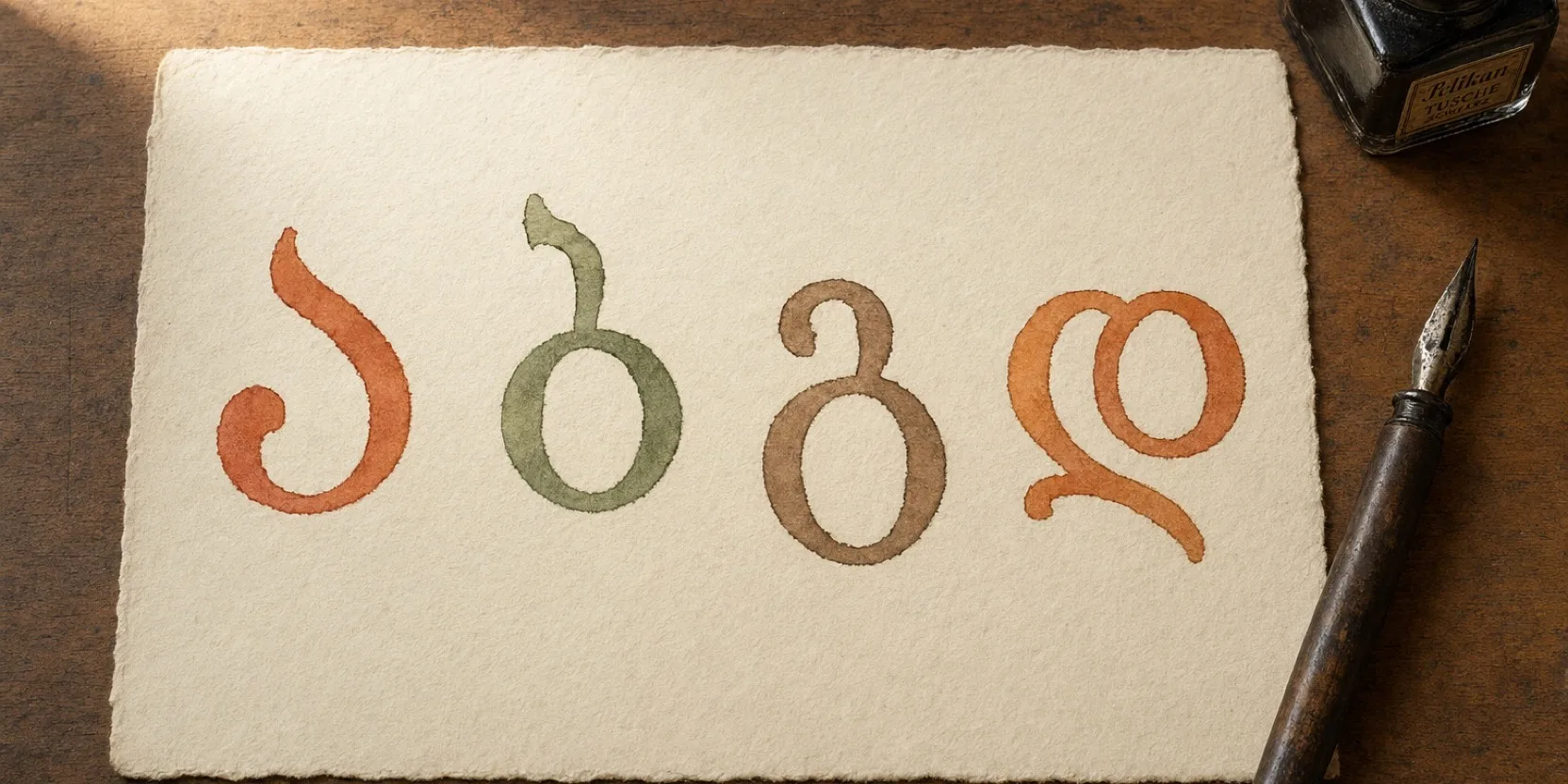





The everyday way to ask how are you in Georgian is rogor khar? (როგორ ხარ?). That covers friends. For strangers and elders there is a polite version, and either way you need an answer ready about two seconds after you ask. Below is the whole exchange, question and replies, with native-speaker audio on every phrase.
The quick answer: rogor khar
Rogor means how and khar means you are, so for once Georgian maps onto English almost word for word. This is the informal version, the one for friends and family. In Latin letters you will see it written both rogor khar and rogor xar, which are the same phrase.
It is also friendlier to pronounce than it looks. Two pieces, ro-gor, then khar. The r gets a light roll, the way Scottish English rolls it, and the kh is a soft sound at the back of the throat, like the ch in loch. Miss it in the first weeks and you will still be understood.
Formal or informal: khar vs khart
The difference is one letter. Khar is you are said to one person you know well. Add a t, khart, and the verb becomes plural, which in Georgian doubles as the polite form, the same move as French tu and vous. That final t is the general politeness switch of the language, so this one letter keeps paying off long after this page. Tkven is the formal you, and it drops out of real speech constantly, so you will hear plain rogor khart? just as often.
When in doubt, go formal. Khart fits strangers, elders, your landlord, the bank counter, anyone you met five minutes ago. Khar is for friends, family, and people your own age. The catch is that it only runs one way. An elder or a boss will often use khar with you, and that is not an invitation to mirror it. They still get khart back.
Above khart there is one more rung. Rogor brdzandebit? (როგორ ბრძანდებით?) is built on a special politeness verb and adds one more degree of respect. It is current, everyday Georgian for addressing elders, doctors, and professors, and you will hear it from staff in formal settings. Recognize it, answer it like any other how are you, and feel zero pressure to produce a consonant cluster like brdz in your first months.
Asking with a name: bat’ono and kalbat’ono
Georgian leans on respectful address more than English does. ბატონო (bat’ono) goes before a man’s first name and ქალბატონო (kalbat’ono) before a woman’s. Both work like a softer sir and madam, and they attach to first names, not surnames.
This is the one for the shopkeeper you see every morning, or for your Georgian in-laws. Attaching a name changes how the question lands. You stop sounding like a phrasebook and start sounding like someone who lives there.
How to answer rogor khar
The question is the easy half. The reply Georgians reach for first is two words:
K’argad means well, and madloba is thanks, a word useful enough to have its own page on how to say thank you in Georgian. Together they are the Georgian fine, thanks, and they answer the formal and the informal question equally well.
About that apostrophe: the k’ in k’argad marks an ejective consonant, a k with a small catch in the throat right behind it. Georgian has a handful of these sounds and English has none, so no beginner nails them at the start. Say a plain k, keep the conversation moving, and let the audio pull your pronunciation toward the real thing over time.
On a genuinely good day, upgrade it and hand the question back:
Dzalian means very, and da tkven? returns the question politely. With a friend, the return shrinks:
And for the days that are not going well:
Two footnotes worth keeping. You will also hear k’argad var, literally I am well, doing the same job as k’argad, madloba. And k’argad on its own doubles as the everyday casual bye, one of the small overlaps covered in how to say goodbye in Georgian.
The whole exchange
In real life the question rarely stands alone. The greeting comes first, then the question, the same rhythm you already know from English:
Gamarjoba is the all-purpose Georgian hello, and it has its own page at how to say hello in Georgian if you want the morning and evening greetings too. Put the pieces together and a complete first conversation looks like this:
- გამარჯობა. როგორ ხართ თქვენ? (gamarjoba. rogor khart tkven?) Hello. How are you?
- ძალიან კარგად, მადლობა. და თქვენ? (dzalian k’argad, madloba. da tkven?) Very well, thanks. And you?
- კარგად, მადლობა. (k’argad, madloba.) Well, thanks.
Three lines, each of them playable above, and you have held an actual conversation in Georgian. The natural next step is a name and where you are from, covered in how to introduce yourself in Georgian. And if you want the exchange drilled until it is reflexive rather than remembered, this is exactly where Speak Georgian in 50 Days begins: the polite how are you turns up in lesson 2, and the first lesson is free.