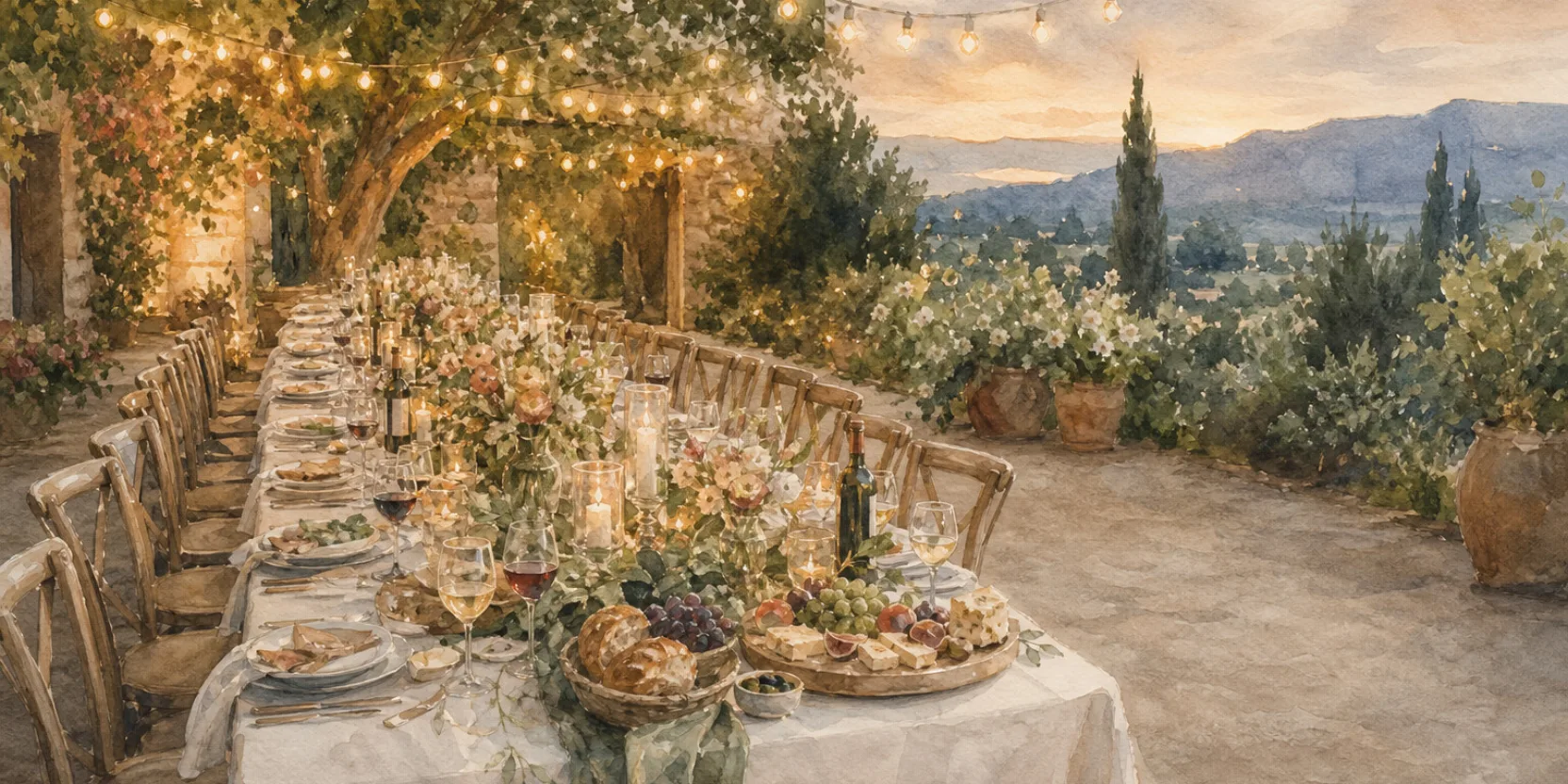




The invitation is not really optional. Your partner’s family is having a supra, or a friend is, and you are going. Somewhere under the politeness you are running a quiet list of worries. How much you will have to drink. Whether someone will hand you the floor for a toast. How long you are committed for. What you do for the hours you cannot follow a word. Whether you are going to do something that lands wrong.
This post is that list, in order, answered by someone who has sat through a lot of Georgian supras as the foreigner at the table. Georgian supra etiquette is less rigid than the worry makes it, and the few parts that matter are easy to learn.
If you want the full picture of what a supra is, the seating, the food, the toast sequence, we have a separate guide to what a Georgian supra is. This one is narrower. It is the five questions a first-timer actually carries in.
Do I have to drink?
This is the question under most of the nerves, so take the honest answer first: no, you do not have to drink much, and you do not have to keep pace with anyone.
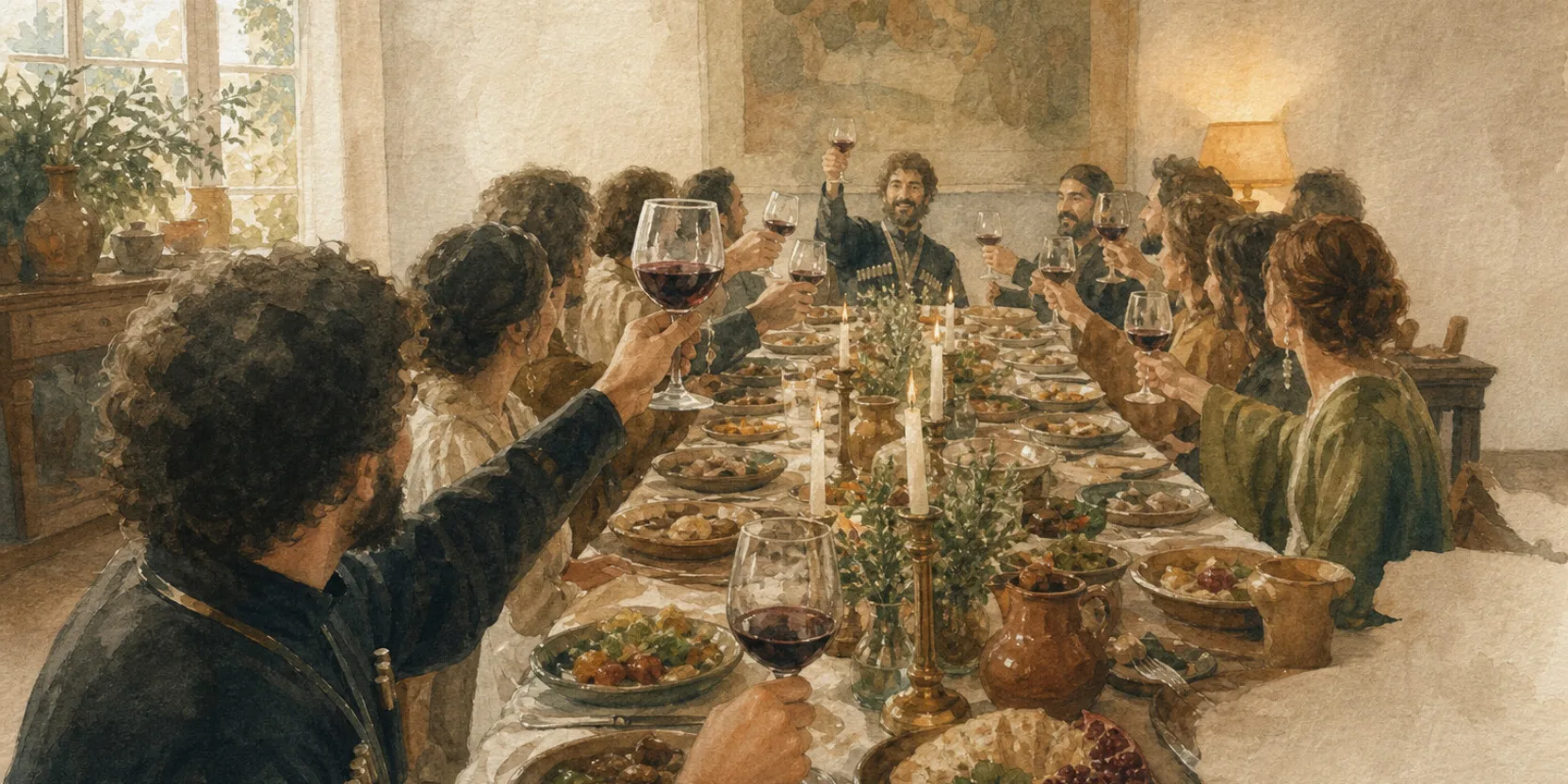
A supra runs on toasts, not on steady drinking. The tamada, the toastmaster, gives a toast, and then everyone drinks together. You are expected to take part, which means raising your glass when the table does. But “take part” can be a genuine sip. It can even be lifting the glass and touching it to your lips. The toast is honored by the gesture, not by the volume.
There is an old reputation that Georgian feasts pressure guests to drink hard. It exists because it used to be more true. Today, hosts are relaxed about it, especially with foreign guests, and nobody at a normal family table is keeping score on you. You can drink wine for the toasts that move you and switch to water in between. You can let a glass sit. If someone encourages another pour and you would rather not, a smile and a hand over the glass is a complete answer.
The one thing worth doing is taking the first toast properly, with everyone, rather than sitting it out. After that, your pace is your own.
Will I have to give a toast?
Maybe, and it is worth being ready so it is not a shock.
The tamada runs the toasts, but a good one pulls guests in, and after a few rounds they may turn to you. Being asked is not a test. It is the table making space for you, which is a warm thing, not a trap.
What you say can be short and simple. One or two honest sentences. Thank the host. Say something about the family, or the house, or how glad you are to be at the table. The single rule that matters: do not toast yourself, and do not toast back to whatever was just toasted to you on your own behalf. A guest’s toast points outward, at the host, the family, the gathering.
If you want one word of Georgian to keep in your back pocket, gaumarjos is the word said with every toast. Even in broken Georgian, it lands far better than a perfect paragraph in English. The bar for a foreigner trying Georgian at a supra is low, and the warmth when you clear it is high.
How long does a supra last?
Longer than a dinner. Three to six hours is normal. A wedding or a big holiday supra can run all night. A spontaneous weekday family supra is usually shorter, an evening rather than a marathon.
The useful move is to plan for the long version. Do not schedule anything for after. Do not arrive with a hard exit time in your head, because a supra is not built around one and you will spend the evening watching a clock that nobody else is watching. The meal is not the event. The hours are the event. The food arrives in waves, the toasts pace the night, and the whole thing is designed to be unhurried.
If you genuinely have to leave before it winds down, that is allowed, with a little care. See the last question.
What do I do when I cannot follow the conversation?
This is the real one. Not the drinking, not the toast. The quiet stretch of being at a long table while an entire evening happens in a language you cannot follow, smiling at things a beat after everyone else, half-guessing.
For your first few supras, the honest answer is that you ride it. You smile, you eat, you raise your glass on the toasts, and you lean on your partner or a kind neighbor to translate the toasts that matter. Georgians are used to having a guest at the table who does not speak the language, and a supra is warm enough to carry you through as a guest. The food helps. Gemrielia, “it is delicious,” and didi madloba, “thank you very much,” are small phrases that go a long way and ask nothing of your grammar.
It also helps to know that the evening hands you moments that need no translation. A supra often breaks into song, frequently in startling three-part harmony, and you do not need a word of Georgian to be moved by it. The neighbor beside you will usually switch to English for stretches to keep you company, and the host will quietly make sure you are not stranded. The food keeps arriving and gives you something to do and something honest to praise. The hours you cannot follow are real, but they are rarely empty, and most first-timers come away surprised that the evening felt warmer from the inside than the worry had made it look from outside.
But it is worth being honest about what that stretch is. It is the permanent-guest feeling, and it is the thing that does not fully resolve with etiquette tips. You can know every rule in this post and still spend the evening slightly outside it. What actually changes a supra is understanding what is being said, catching a joke without the lag, answering a toast in the language it was given in.
That is not survival phrases. It is conversational Georgian, and it is a months-long thing, not an evening’s prep. It is also the single best reason an expat with a Georgian family learns the language. The first supra where you follow the table instead of watching it is a genuinely different evening. If you are heading toward a lot of these, our guide on how to learn Georgian is a good place to start, and our piece on Georgian toasts is worth reading before the next one.
What counts as rude?
Less than you fear. Georgians extend a lot of grace to a guest, and to a foreign guest most of all. But a few things are worth knowing, because they are easy to get right once someone tells you.
- Do not clink glasses during a toast to the dead. Most toasts end with everyone touching glasses. Toasts to people who have passed away do not. They are drunk in silence. If the table goes quiet and nobody reaches in, follow them and drink without clinking.
- Do not rush the food off your plate. An empty plate at a supra is read as a host failing to feed you, so it gets refilled. Keep a little something on it. Eat slowly. There is always more coming.
- Do not talk over a toast. When the tamada or anyone given the floor is speaking, the table listens. Side conversation during a toast is the clearest small rudeness, and the easiest to avoid.
- Do not toast yourself, as above.
- Do not try to leave mid-toast. If you must go early, tell the host warmly, thank them, and slip out at a natural break after a toast rather than during one. Leaving very early can read as cold, because the evening is the gift, but a warm exit at the right moment is fine.
Notice what is not on that list. Mispronouncing Georgian is not rude. Not drinking much is not rude. Not knowing the toast order is not rude, that is the tamada’s job, not yours. Sitting where you are put and staying genuinely engaged covers almost everything.
One last thing worth saying plainly: supra customs vary. They vary by family, by region, by whether it is a weeknight dinner or a wedding. Any rule you read, including these, comes with the caveat that the real rule at any given table is whatever the host does. Watch them, follow them, and you will be fine. Your first supra is not an exam. It is an invitation, and the table wants you to enjoy it.