



If you are planning a trip or a move to Georgia, the country in the Caucasus rather than the US state, one of the first practical questions is whether you can manage in English. It is a fair question, and the honest answer has a shape worth knowing before you go.
Yes, English is spoken in Georgia, widely in the cities and among younger people. It is patchier in the regions and with older Georgians. You can travel the country comfortably on English alone, and you can even live in Tbilisi on it. Whether you should is a different question, and this guide covers both.
Is English spoken in Georgia?
English is common in Georgia, but unevenly, and the pattern is predictable once you know it.
The single biggest factor is age. English has been a mandatory school subject for years, and the government has pushed it hard, so younger Georgians have generally studied it and many speak it well. Older Georgians studied in a different era, when Russian was the second language taught, so with the older generation you are more likely to share Russian than English, if you share anything beyond Georgian.
The second factor is place. In Tbilisi, Batumi, and Kutaisi, English is genuinely common. In a village in Kakheti or a mountain town in the regions, it is rare. The third factor is context: anyone whose job touches tourism, hospitality, or international business tends to speak solid English, because the work selects for it.
Put those together and you can predict almost any encounter. A young barista in central Tbilisi: fluent English, very likely. An older farmer at a roadside stand in Imereti: Georgian, probably some Russian, little or no English.
English in Tbilisi and the big cities
In Tbilisi, an English speaker is rarely stuck.
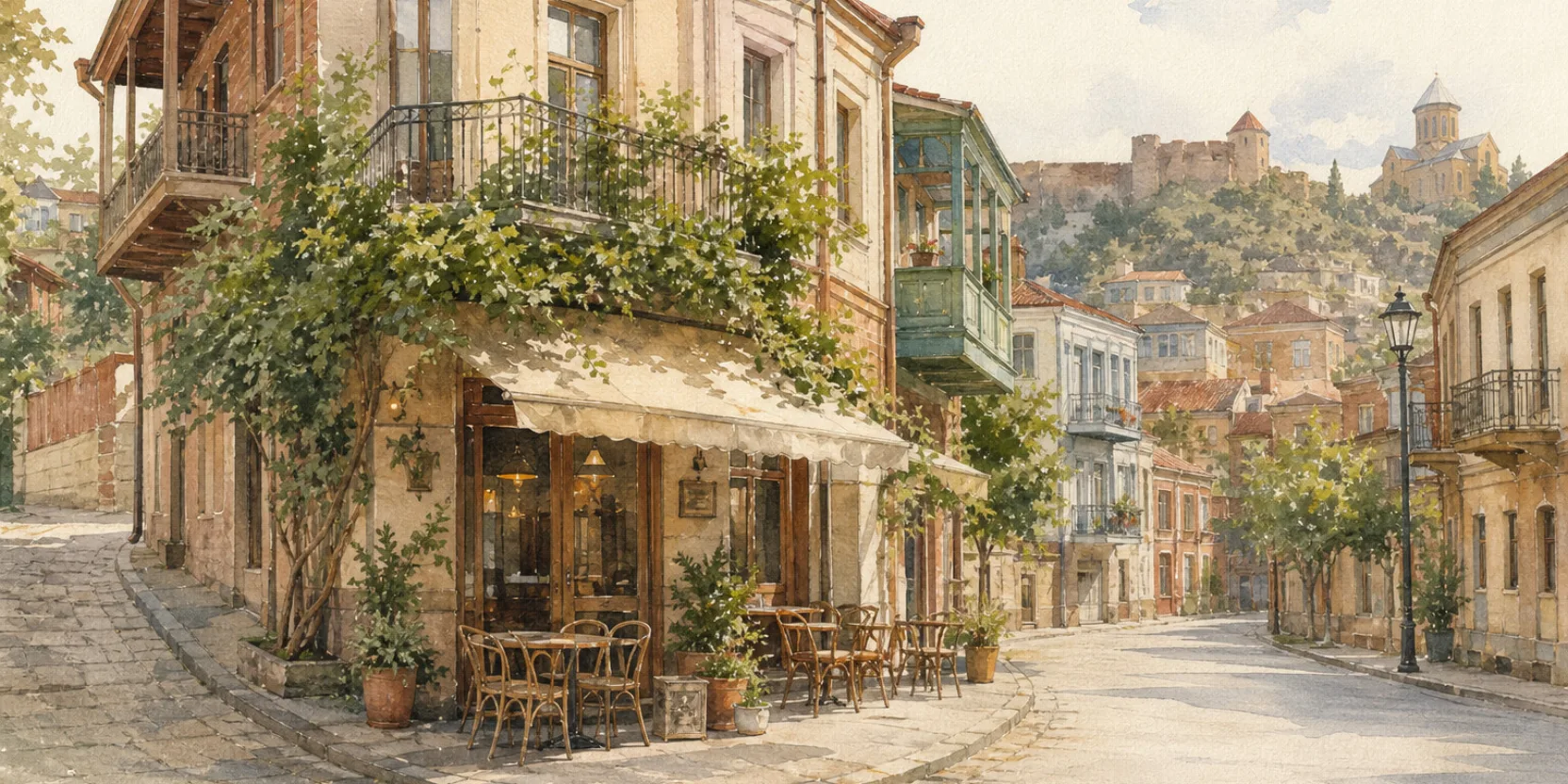
Cafes, restaurants, hotels, and the shops used by visitors and expats are staffed largely by younger people, and English there is reliable. Banks, clinics, and the larger services have English-speaking staff or can find someone. The menus are in English almost everywhere. Delivery and ride apps work in English. The whole central-district layer of the city, the part most travelers and most newly arrived expats spend their time in, runs comfortably in English.
Batumi, the seaside city, is similar, and busier with English in the summer tourist season. Kutaisi and the other cities are a step down from Tbilisi but still manageable for a visitor.
Where it gets patchier even in the city is the everyday-Georgian layer underneath the visitor layer. Taxi drivers are a mixed bag. The caretaker of your building, the staff at a small neighborhood shop, the older woman at the produce stand, may have no English at all. None of that stops you living in Tbilisi. It does mean a slice of daily life happens in gestures and goodwill rather than conversation.
English outside the cities
Leave the cities and English drops away fast.
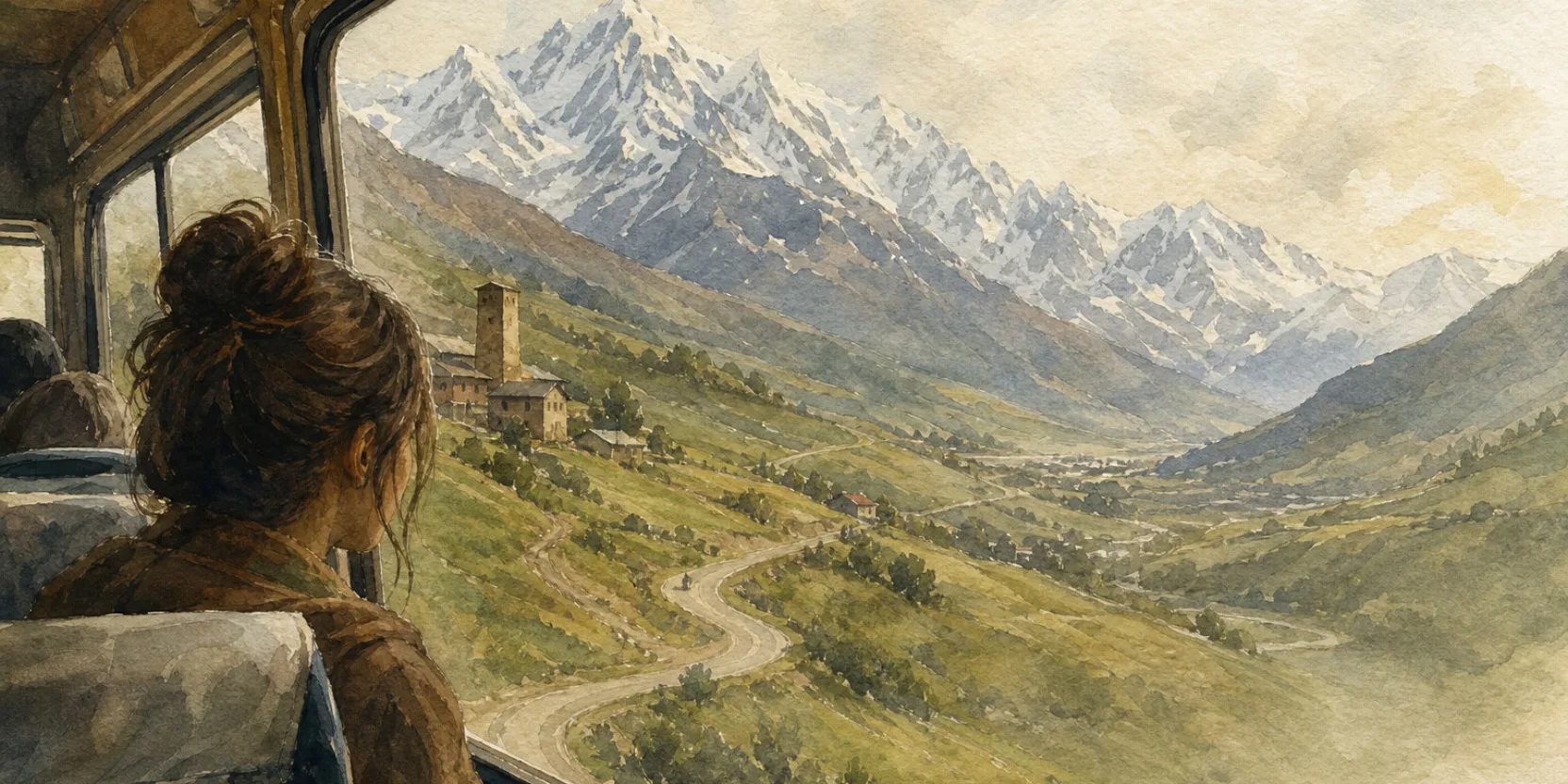
The regions are where Georgia is at its best, Kakheti and its wine, the mountains at Kazbegi and Svaneti, the villages, the small towns. They are also where you will meet the least English. People are warm and will go out of their way to help you, but the shared language often will not be there. A marshrutka driver, a guesthouse host in a mountain village, a shopkeeper in a small town, you should not assume English.
As a traveler this is manageable. Translation apps cover a lot, pointing and smiling covers more, and Georgian hospitality fills the rest. As a resident who wants to actually explore the country rather than stay in the Tbilisi bubble, it is the clearest reason a little Georgian pays off. The regions open up completely differently when you can say even a few sentences.
It is also worth knowing that the rural language gap is not a sign of unfriendliness, quite the opposite. The further you get from the tourist track, the more genuinely curious and welcoming people tend to be about a foreigner who has turned up in their corner of the country. The shared-language problem is real, and the warmth around it is just as real.
Where English runs out: bureaucracy and the older generation
Two specific situations are worth flagging because they catch people off guard.
The first is officialdom. Government offices, some banks for anything non-routine, notaries, certain medical and legal paperwork. English coverage here is inconsistent. Plenty of expats handle Georgian bureaucracy by bringing a Georgian-speaking friend or a translator, and that is a normal, sensible move rather than a failure. Do not assume a government counter will run in English.
The second is the older generation. If you have Georgian in-laws, older neighbors, or you spend time with anyone over a certain age, English will often not be the bridge. Many older Georgians have Russian as their second language rather than English, for historical reasons of when they were schooled. As a foreigner you can lean on that if you happen to have Russian, but it is worth knowing that with the older generation, Georgian itself is usually the warmer and simpler choice, and increasingly the expected one.
Managing when English runs out
When you do hit the gap, a few habits turn it into a non-issue rather than a problem.
Translation apps handle Georgian well enough now for most practical moments, a menu, a price, a question to a shopkeeper. Keep one with an offline Georgian pack downloaded, because mountain villages and marshrutkas are exactly where signal and English both disappear at the same time.
Learn a small handful of Georgian words before anything else. Hello, thank you, please, yes, no, how much. They are an afternoon’s work, and they do something a translation app cannot: they signal that you are trying, which changes how warmly the other person meets you. A Georgian who sees a foreigner attempt their language will usually go out of their way in return.
For anything official or complicated, bring a Georgian speaker rather than fighting through it alone. A friend, a colleague, a paid translator for a morning. Expats do this routinely and nobody thinks less of it.
And lean on Georgian hospitality, which is not a cliche. People will walk you to the place you are looking for, call a relative who speaks English, or draw you a map on a napkin. The language gap in Georgia is rarely cold. It is just a gap, and it gets bridged constantly by goodwill.
Getting by versus living there
So, can you get by in Georgia on English? Yes. A traveler can have a great trip without a word of Georgian, and a new arrival in Tbilisi can run a functional life in English for a long time. That is genuinely true and worth saying plainly.
But getting by and living there are not the same thing. English gets you the transactional layer: the coffee, the rent, the paperwork done through a translator, the version of Georgia that is set up for visitors. It does not get you the conversation with your partner’s grandmother, the easy back-and-forth with the neighbors, the regions on their own terms, the jokes, the warmth that opens up the moment a Georgian hears you try.
Even a little Georgian changes which country you are living in. Gamarjoba, hello, said to the building caretaker is a different relationship than a nod. This is the reason most expats who settle here for real eventually start learning, and it is worth more on a Tbilisi neighborhoods decision and a long stay than people expect when they first arrive thinking living in Tbilisi on English will be enough.
If you are coming for a week, English is plenty. If you are coming to stay, English will get you through the door, and some Georgian is what gets you the rest of the house. Our guide on how to learn Georgian is where to start, and if you are weighing which second language is the better investment for life here, we compared Russian and Georgian separately. English will not let you down in Tbilisi. It will just quietly keep you a guest.