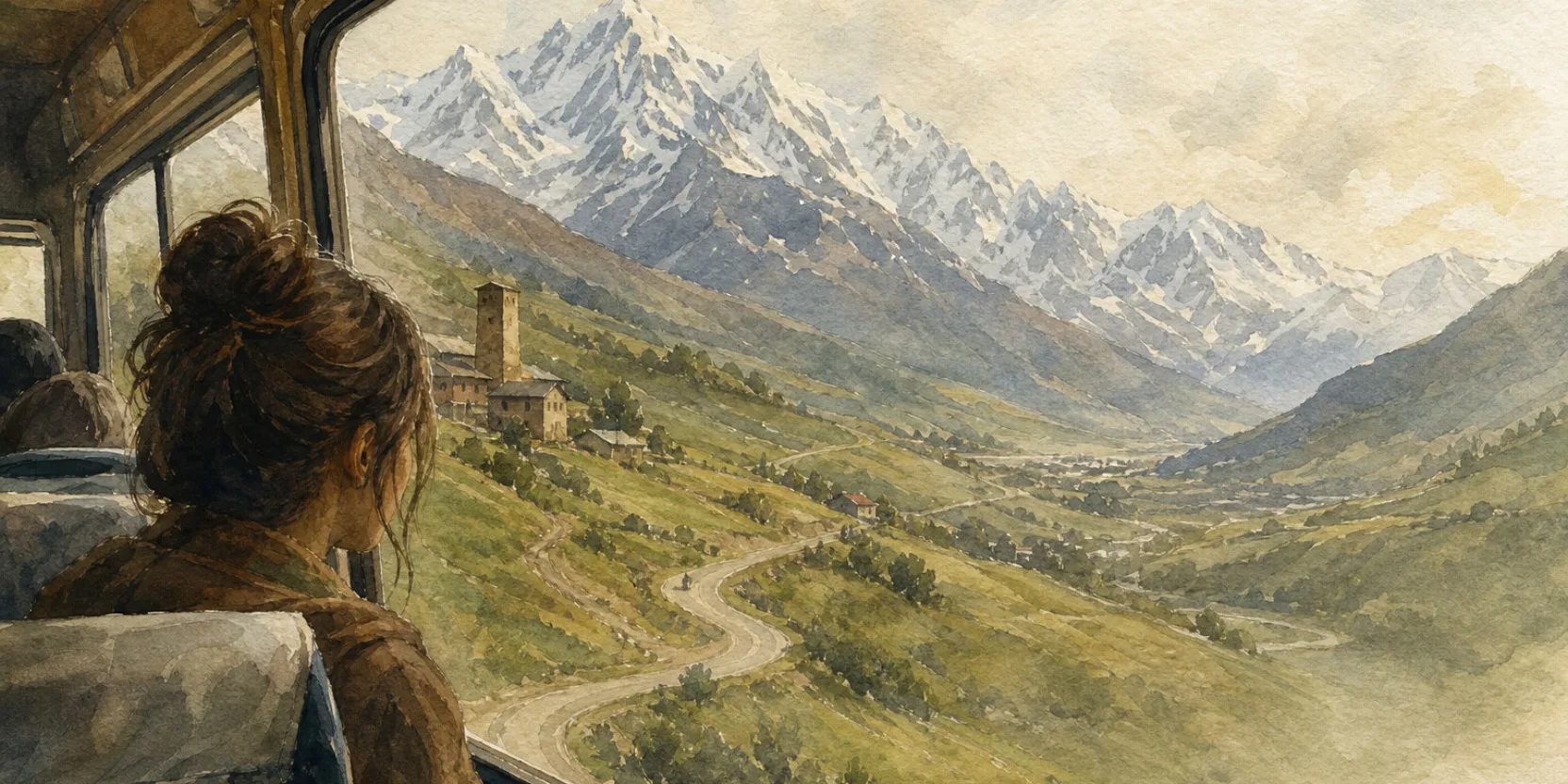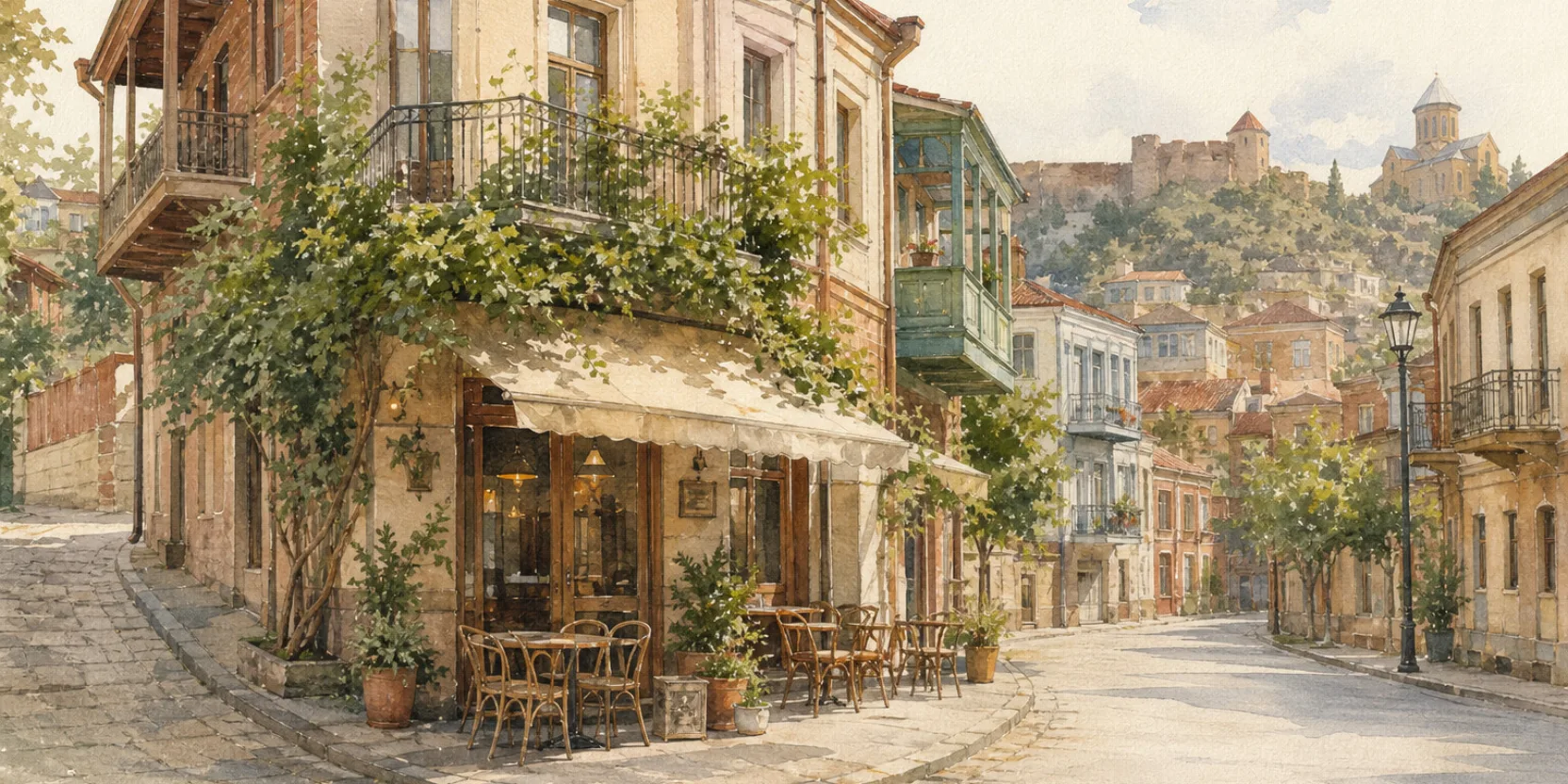



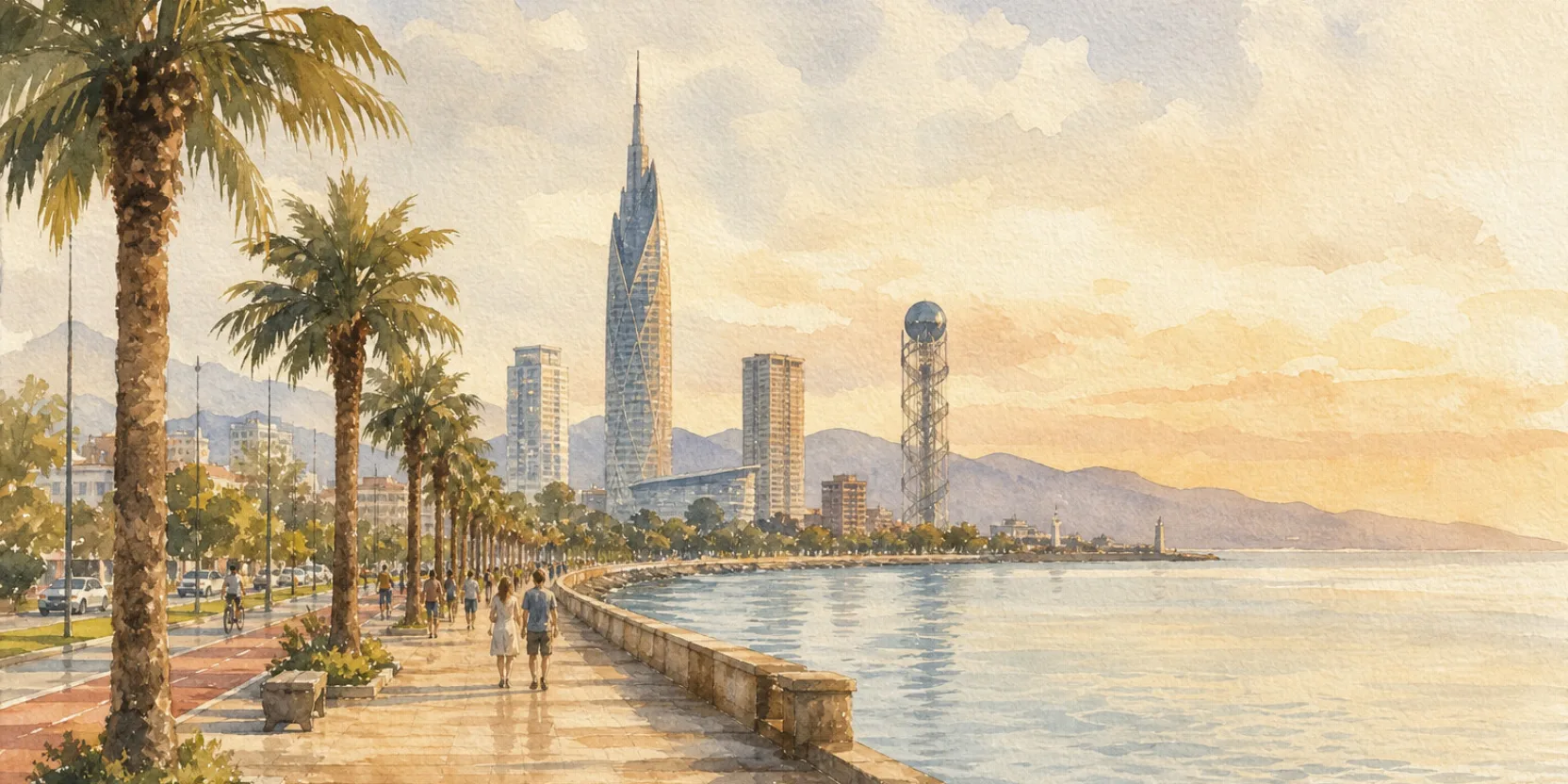

If you are planning a move to Georgia, or a long stay, you will quickly narrow it to two cities. Tbilisi, the capital, inland and year-round. Batumi, the seaside city on the Black Sea. Tbilisi vs Batumi is the real decision most foreigners face, and the honest answer is that it is a genuine trade-off rather than a contest with a winner.
I am based in Tbilisi, and I have traveled Georgia, including Adjara, the region Batumi sits in. Here is how the two cities actually compare, and how to tell which one fits you.
Tbilisi or Batumi: the short answer
For most expats, Tbilisi is the better base. It has the stronger infrastructure, the schools, the jobs, the deepest culture, and a community that is there all twelve months of the year.
Batumi is the better choice for a specific person: someone who wants the sea, a slower pace, and somewhat lower costs, and who is genuinely fine with a city that goes quiet outside the summer.
Neither is wrong. They are answers to different questions about how you want to live. The rest of this is the detail behind that.
Tbilisi: the capital
Tbilisi is a city of roughly 1.2 million people, and it feels like a capital in the ways that matter for a foreigner settling in.
The infrastructure is the deepest in the country. The widest choice of apartments across distinct Tbilisi neighborhoods, the best hospitals, the international schools, the coworking spaces, the reliable fast internet. If you have a question, a need, a problem, Tbilisi is where the answer exists.
It is also where the life is. The restaurant scene, the wine bars, the galleries, the underground music scene, the cafes, all of it concentrated here. The expat and digital-nomad community is the largest and, importantly, the steadiest. You can arrive in February and find people, events, and a social footing, which is not equally true everywhere in Georgia.
Tbilisi’s weather is continental: hot, dry summers and genuinely cold winters. The city is inland, ringed by hills, and it has four real seasons. The downside of the capital is the capital-ness of it. Traffic, some noise, the ordinary friction of a busy city. For most foreigners building a life in Georgia, that friction is a fair price for everything else Tbilisi puts within reach.
Batumi: the seaside city
Batumi is Georgia’s coast. It sits on the Black Sea in Adjara, it is subtropical, and it has a completely different feel from the capital.
The appeal is straightforward and real. You live by the sea. Palm trees, a long seafront promenade, warm humid air, mild winters, a skyline of resort towers. The pace is slower than Tbilisi. The city is more compact and easier to move around. For someone whose ideal day includes the sound of the sea and a walk along the water, Batumi delivers something Tbilisi simply cannot.
A normal Batumi day has a different shape from a Tbilisi one. The sea is the organizing fact of it. You orient around the promenade, the light off the water, the closeness of the beach. The city is small enough that you start running into the same faces, which builds a village feel inside a resort city. In summer that village is crowded with visitors. The rest of the year it is quieter and more local, and how that lands on you depends entirely on what you came for.
Batumi is also a resort and casino city, which shapes its character. A lot of its economy and energy is built around summer tourism. That gives it a bright, busy, holiday feel in season, and it is the root of the trade-off covered below.
What Batumi has less of is depth. Fewer international schools and none where everything runs in English, a smaller medical and professional infrastructure, a smaller year-round community, fewer of the steady, non-seasonal things that make a place easy to simply live in rather than visit. It is a wonderful city to be in. It is a thinner city to build a long, complicated life in.
Cost of living: Batumi is cheaper with caveats
Batumi is generally cheaper than Tbilisi. Rent and everyday costs tend to run somewhat lower, and for a budget-conscious mover that is a real point in its favor.
Two honest caveats. First, the gap is smaller than it used to be and smaller than some older articles claim. Estimates of the difference vary widely depending on the source and the season, so treat “Batumi is cheaper” as a modest, real trend rather than a dramatic saving. Second, the comparison depends heavily on what you rent and when. A sea-view apartment in a new Batumi tower in peak summer is not a budget choice. A modest place off-season is. For the full picture of what the capital costs, our cost of living in Tbilisi breakdown gives the Tbilisi baseline to compare against.
If the entire decision comes down to saving money, Batumi wins narrowly. For most people the cost difference is not large enough to be the deciding factor, and the other differences matter more.
The seasonal question
This is the point most comparisons underplay, and it is the single most important thing to understand about Batumi.
Batumi in July is not the same city as Batumi in January. In the high summer season, roughly July through September, it is full, lively, warm, and busy, the resort city at its peak. Outside that window it quietens sharply. A lot of the seasonal businesses slow down or close, the crowds thin, the energy drops, and the rain sets in, because Batumi is wet, considerably wetter across the year than Tbilisi.
For a summer visit, that seasonality is invisible and irrelevant. For someone moving there, it is the whole game, because you will live in the off-season city far more than the summer one. Some people love the quiet, rainy, slow Batumi winter. Others find it isolating, especially with a smaller year-round community to fall back on.
Tbilisi has seasons too, real cold in winter, but it does not empty out. Its life is not built on a tourist calendar, so the city in January is recognizably the same city as the city in July.
The practical takeaway: if you are considering Batumi, visit in winter before you commit, not in summer. The winter visit shows you the version you would actually be signing a lease for.
A few practical factors
A few smaller things round out the picture.
Healthcare follows the same pattern as everything else. Tbilisi has the deepest medical infrastructure, the widest choice of private clinics and specialists. Batumi is fine for routine care, but for anything serious or specialized, people often travel to the capital.
Both cities have an international airport, which surprises people, so neither one strands you. Tbilisi’s has the wider route network. Batumi’s is smaller but real, and convenient in summer.
Getting around differs too. Tbilisi is large, with a metro and a strong taxi habit. Batumi is compact and genuinely walkable end to end, which is part of its easy-living appeal.
And the two cities point you at different parts of Georgia. From Tbilisi, the classic regions are close: Kakheti and its wine, Kazbegi and the mountains, Mtskheta. From Batumi, you have the Adjara highlands rising behind the city and the rest of the Black Sea coast. If exploring the country is a priority, Tbilisi sits more central to its spread, but Batumi’s own corner is beautiful and underrated.
Side by side
| Tbilisi | Batumi | |
|---|---|---|
| Vibe | Busy inland capital, four seasons | Subtropical seaside resort city |
| Cost of living | Higher | Modestly lower |
| Infrastructure and schools | Deepest in the country | Smaller, fewer international schools |
| Jobs and community | Largest, steady year-round | Smaller, strongly seasonal |
| Weather | Hot dry summers, cold winters | Mild humid winters, warm summers, much more rain |
| Best for | Building a full life in Georgia | Sea, slower pace, summer-centered living |
Which city is right for you
Choose Tbilisi if you want a base for a real, long, complicated life: a family that needs schools, a career or a business, a steady community you can count on in February as much as August, the deepest version of Georgian culture and city life. This is most expats, and it is why most expats are in Tbilisi.
Choose Batumi if the sea is non-negotiable, if you want a slower and more compact daily life, if your work is fully remote and portable, and if you have honestly pictured the quiet rainy off-season and still want it. For the right person Batumi is genuinely lovely, and the right person is real, just less common than the Batumi marketing suggests.
A practical middle path that a lot of people land on: base in Tbilisi, spend stretches of the summer in Batumi. Georgia is small, the two cities are an easy trip apart, and you do not actually have to pick one forever.
One last thing that holds in both cities. You can live in either Tbilisi or Batumi leaning mostly on English, and in both, doing so gives you a smaller, more transactional version of the place. Adjara, where Batumi sits, has its own strong regional character, and the capital has its own depth, and both of them open up when you have some of the language. If you are settling in Georgia at all, our guide on how to learn Georgian is worth a look, and the post on the language of Georgia explains what you would actually be learning. Pick the city for the life you want. Then learn enough Georgian that the city becomes the full version of itself.