


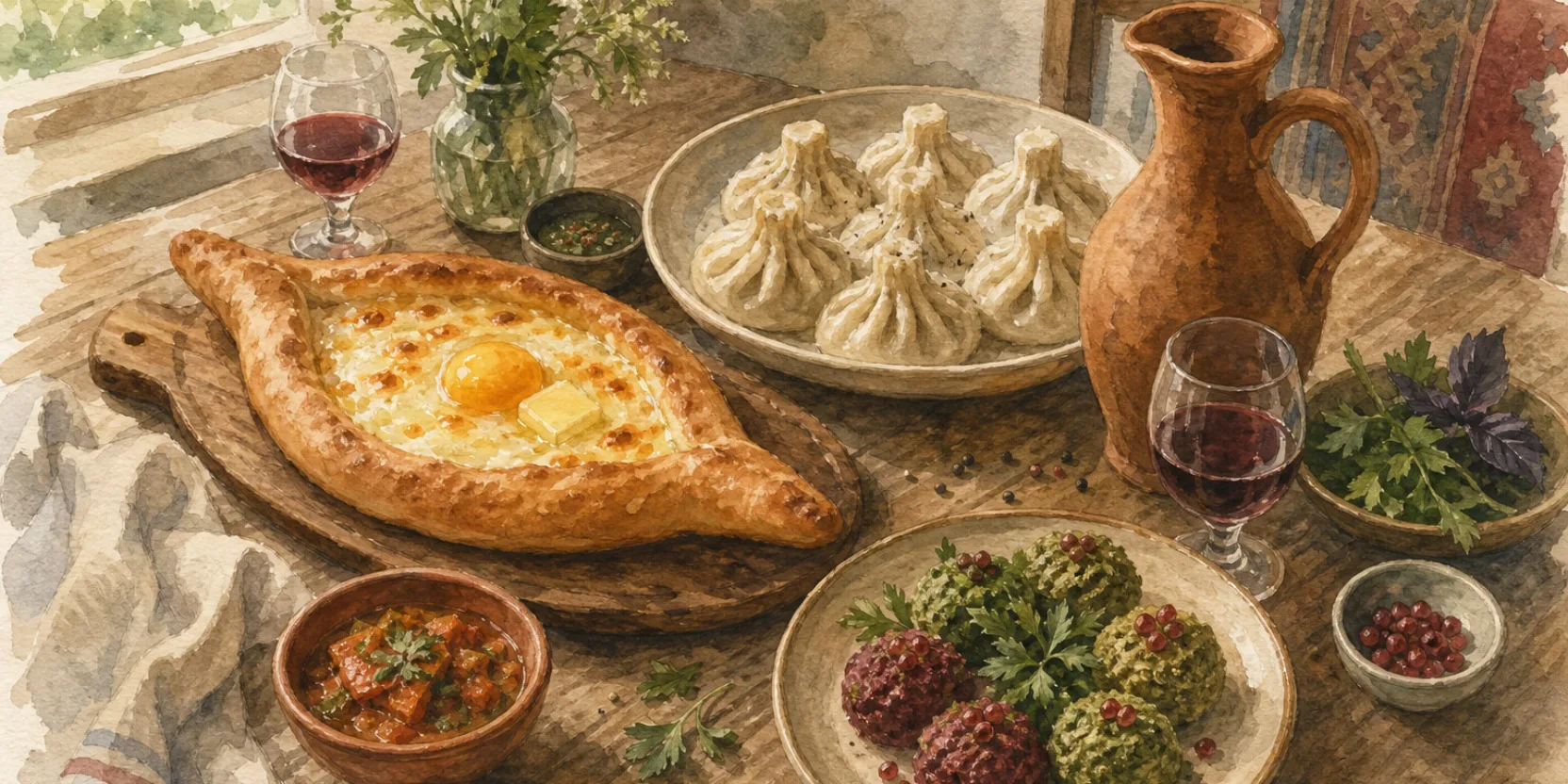

Most people meet Georgian food twice before they ever land in Tbilisi: a photo of khachapuri, a photo of khinkali. Both deserve the fame. But I grew up on this food, and the two famous dishes sit at the front of a table that runs much deeper. Walnut pastes in three colors. A stew that tastes of tarragon and spring. Breads with entire regions behind them. A soup Georgians eat at dawn.
This is the map. The dishes worth knowing, grouped the way a Georgian table actually serves them, and at the end, how to order all of it in Georgian, with audio from a native speaker.
What Georgian food is like
Start with the walnut. Georgian cooking grinds walnuts into sauces, binds vegetables with them, thickens soups with them, and strings them onto thread for dessert. If you have a walnut allergy, learn the word early (nigvzit on a menu means “with walnuts”). Everyone else: this is the flavor spine of the cuisine, and no other food culture uses the walnut this way.
Then the herbs. Coriander, tarragon, dill, parsley, and mint appear in quantities that would look like a mistake in a European kitchen, and fresh herbs are served on their own plate, eaten by the stem, as a side dish in their own right. Under the herbs sits a spice palette that makes Georgian food taste like nowhere else: khmeli suneli, a dried blend built around coriander seed and marigold, the orange petal powder Georgians call Imeretian saffron, and utskho suneli, blue fenugreek, a gentler cousin of the fenugreek in Indian cooking.
The third pillar is sourness. Sour plums cooked into sauce, unripe plums dropped into stews, pomegranate seeds over fried eggplant, vinegar in the vegetable pastes. Georgian food is rich, and the acidity is what keeps you eating.
What it mostly is not: chili-hot. Georgian dishes are seasoned generously but rarely burn. The real heat lives in the west of the country and in adjika, the chili and garlic paste, which tends to arrive on the side so each person decides their own fire.
The last thing to understand is not an ingredient. Georgian food is served to the middle of the table, not to the person. Plates land, everyone reaches, and new dishes stack on top of the old ones as the meal builds. At full scale this becomes the supra, the Georgian feast with wine and a toastmaster, and we have a separate dish-by-dish walk through Georgian supra food. But even a casual dinner keeps the shape: shared plates, more arriving, nobody with a course to themselves.
One useful distinction before the dishes. Everyday Georgian food and feast Georgian food are two registers of the same language. On an ordinary evening a family eats simply enough: beans, bread, cheese, a salad, maybe a stew. The overloaded tables you have seen photos of come out for guests and occasions, because Georgian culture treats the guest as a gift from God, and the table is where that belief gets expressed. Knowing both registers exist will save you from thinking every Georgian dinner is a 4-hour event, and from underestimating what happens when you are actually invited to one.
Regionally, the short version is west and east. Western Georgia leans on corn instead of wheat, cooks with more heat, and produces the best-known cheeses. Eastern Georgia, especially Kakheti, is wheat bread, grilled meat, and most of the country’s wine. The regional names come up dish by dish below.
The big two: khachapuri and khinkali
You will eat both in your first week, so here is the short version and where to go deeper.
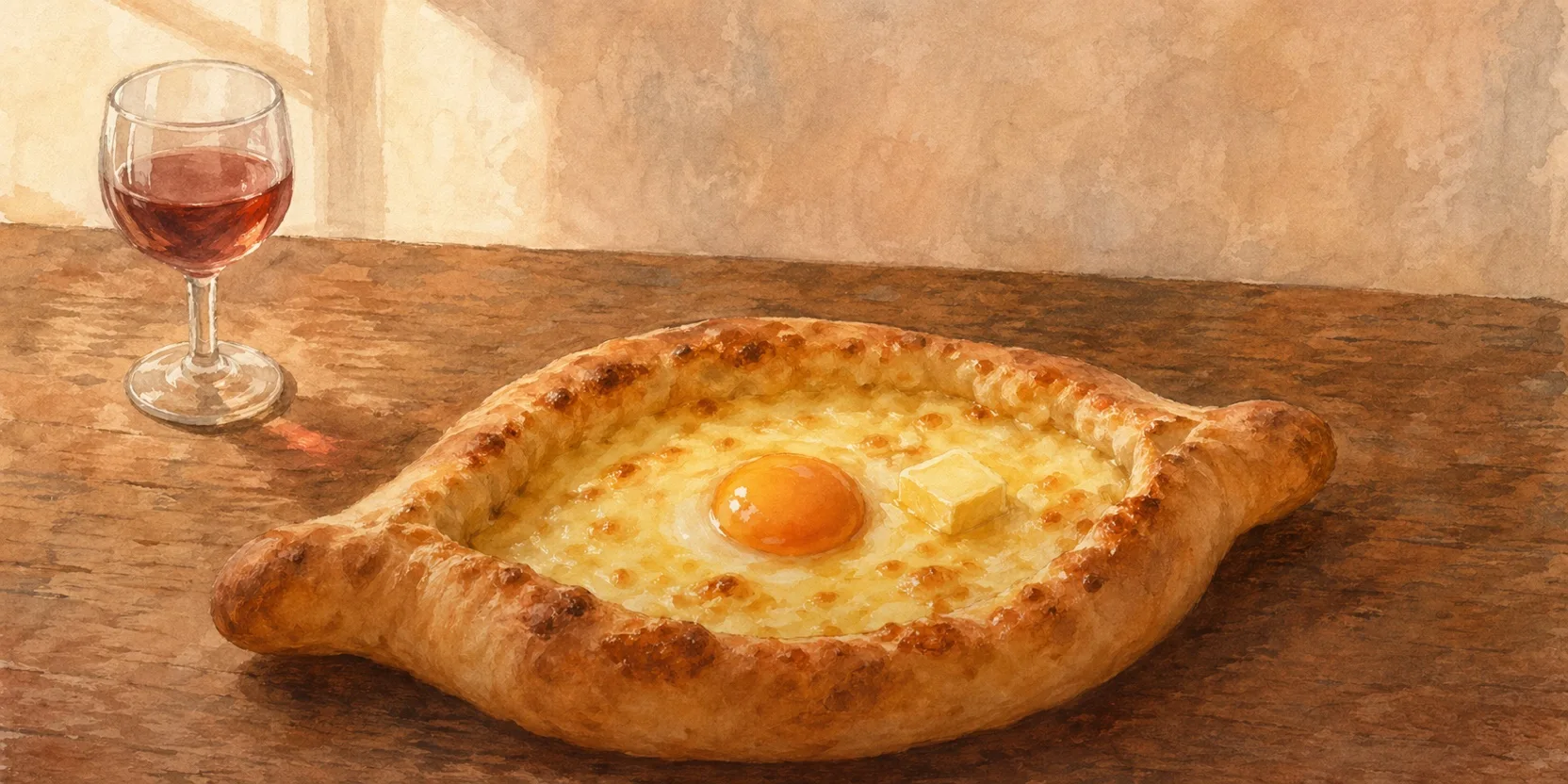
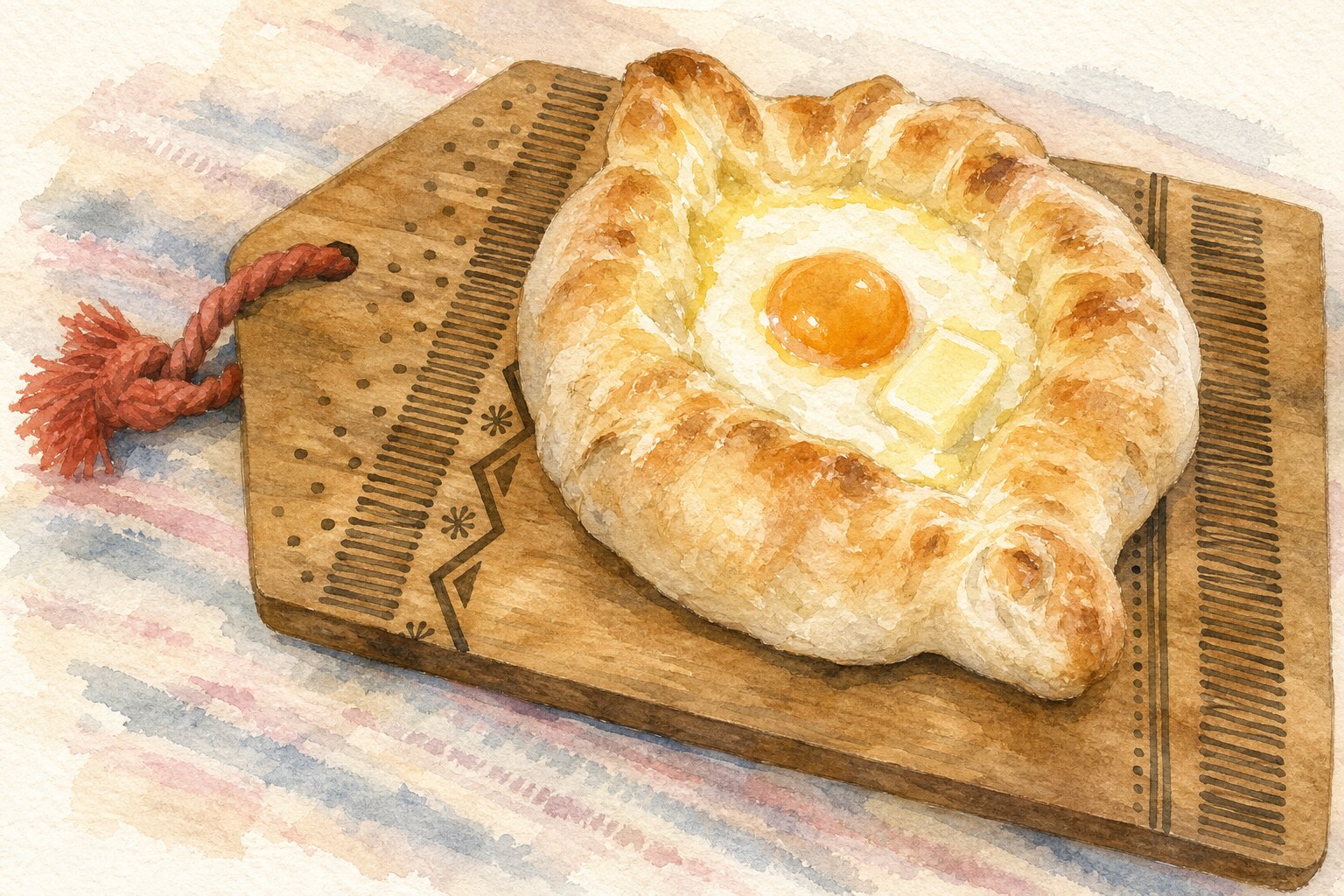
Khachapuri is the cheese bread, and it is a category, not a single dish. There are five regional types of khachapuri: the round closed Imeruli, the boat-shaped Adjaruli with its egg and butter, the double-cheese Megruli, the puff-pastry Penovani, and the potato-and-cheese Ossuri. The Adjarian boat is the one on every feed, and at 1,500 to 2,000 calories it is a dish to share, not a lunch. I am from Adjara, and I will say only this: the adjaruli I grew up eating at home is not quite the thing Tbilisi cafes serve to tourists. The home version is its own dish, and worth chasing.
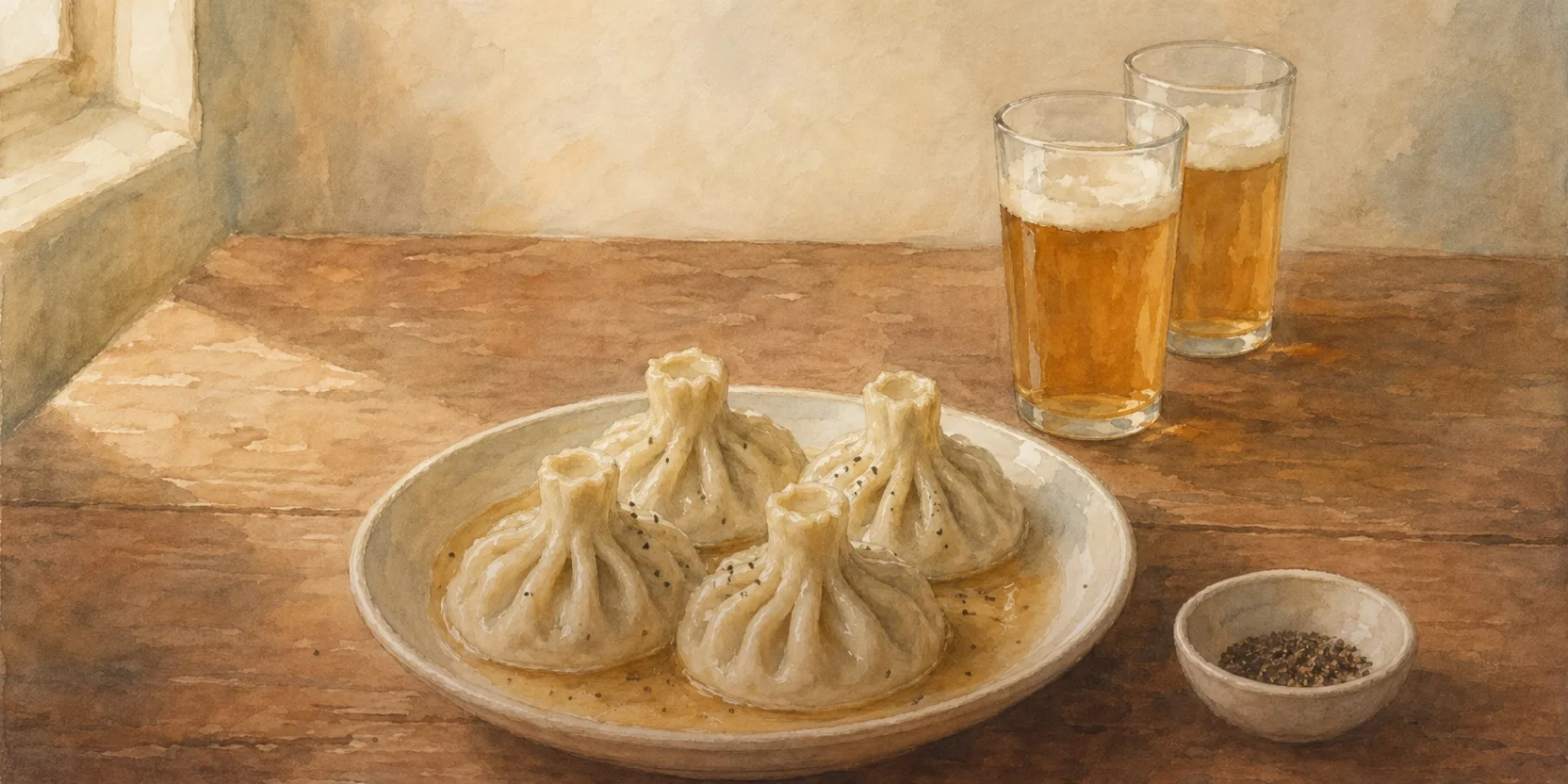
Khinkali are the dumplings: hand-pleated, twisted shut at the top, filled with spiced meat and a reservoir of hot broth. They come from Georgia’s high mountain regions and are eaten by hand, with a small first bite to drink the broth before the rest. The twisted topknot stays on the plate. You order them by the piece rather than by the plate, five or six per person for a normal round, and there is a technique, covered in our guide on how to eat khinkali without wearing them. When I think of khinkali I think of my grandmother’s hands and the way the topknot gets folded shut, and that memory is the standard every restaurant plate competes with.
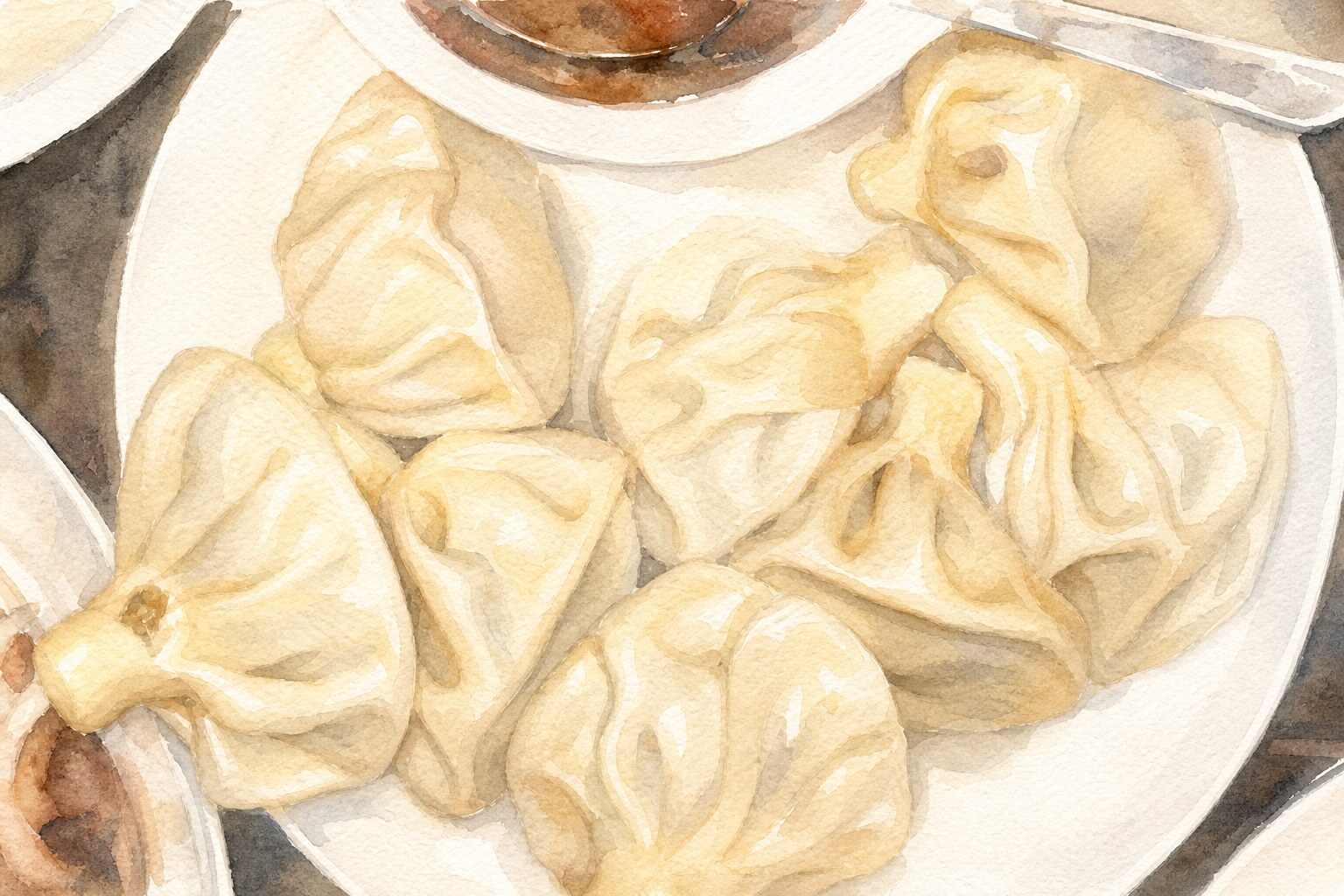
Both earn their reputations. The point of this guide is everything below.
Cold starters: pkhali, badrijani, and the walnut table
The first wave of any Georgian meal is cold, and it never leaves. These plates stay on the table from the first glass to the last, and you will still be picking at them hours in.
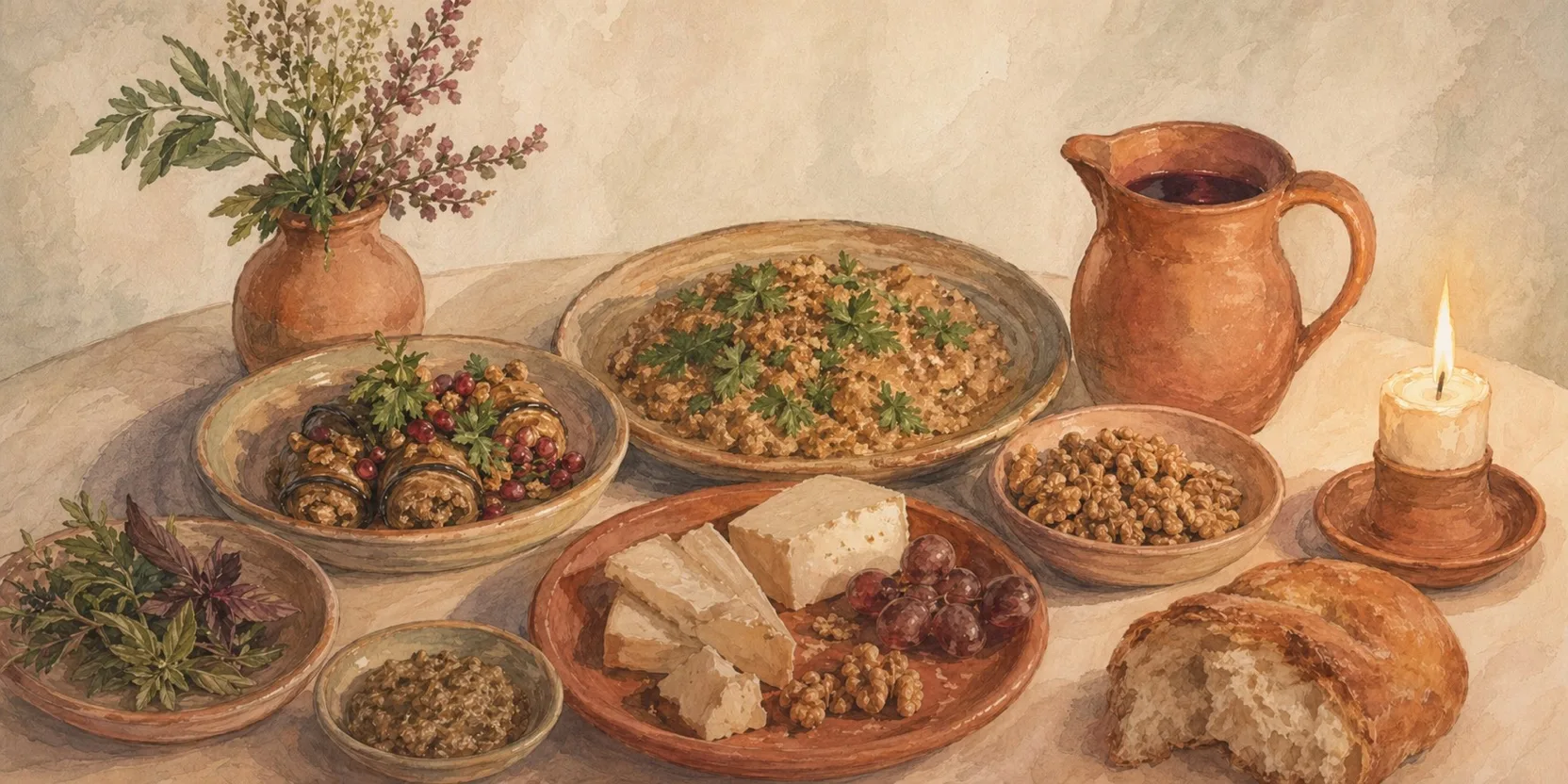
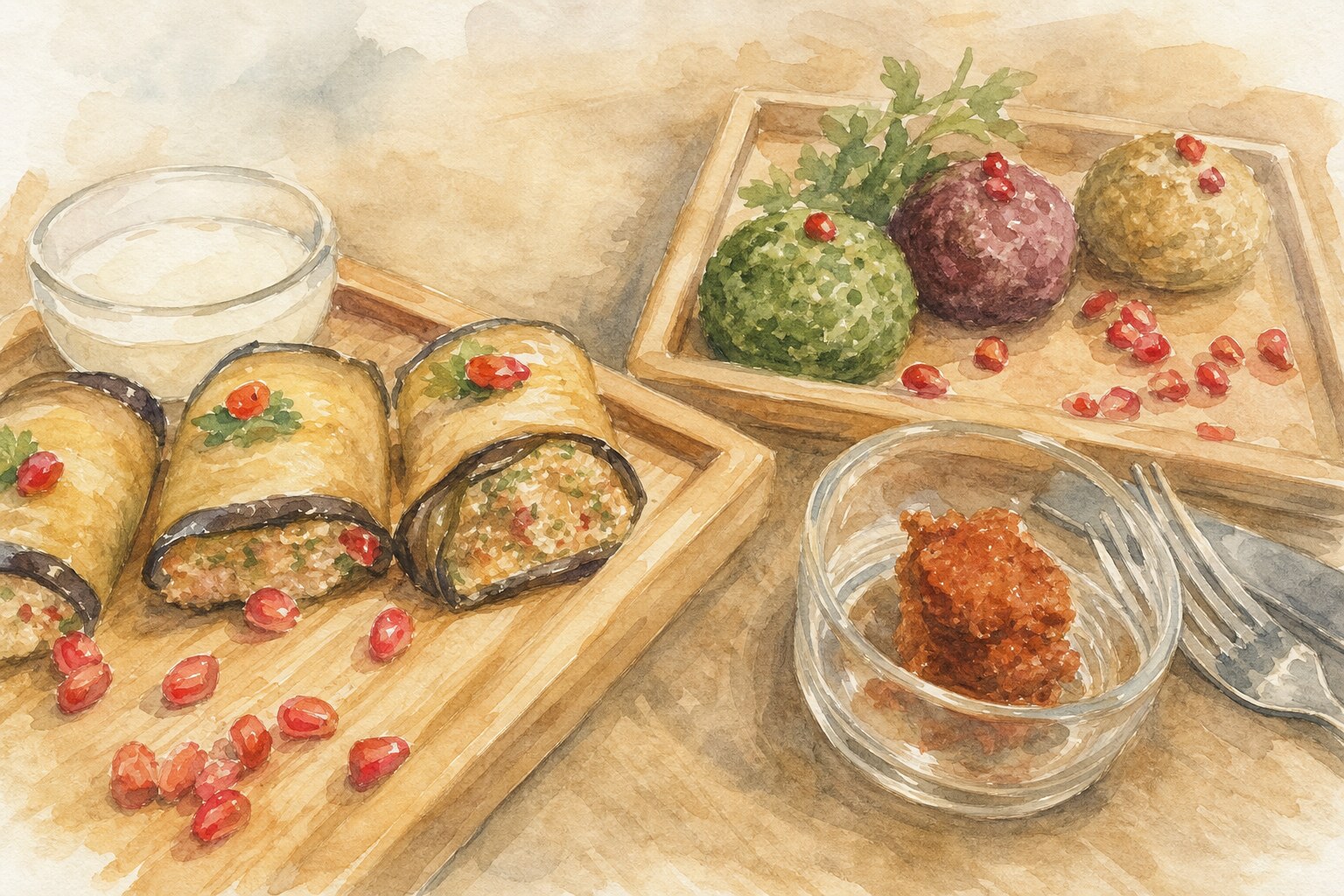
Pkhali. Cooked vegetables, usually spinach, beets, or cabbage, chopped fine and bound with a paste of walnuts, garlic, vinegar, and herbs. It arrives as neat mounds, often a trio of green, red, and pale on one plate, sometimes topped with pomegranate seeds. Eat it on bread. This is the dish that teaches you what Georgian walnut paste is about, and since most versions are naturally vegan, it is also the anchor of every fasting menu in the country.
Badrijani nigvzit. Fried eggplant slices rolled around that same walnut paste and finished with pomegranate seeds. The appetizer everyone photographs, and one of the first dishes every foreigner learns to order by name.
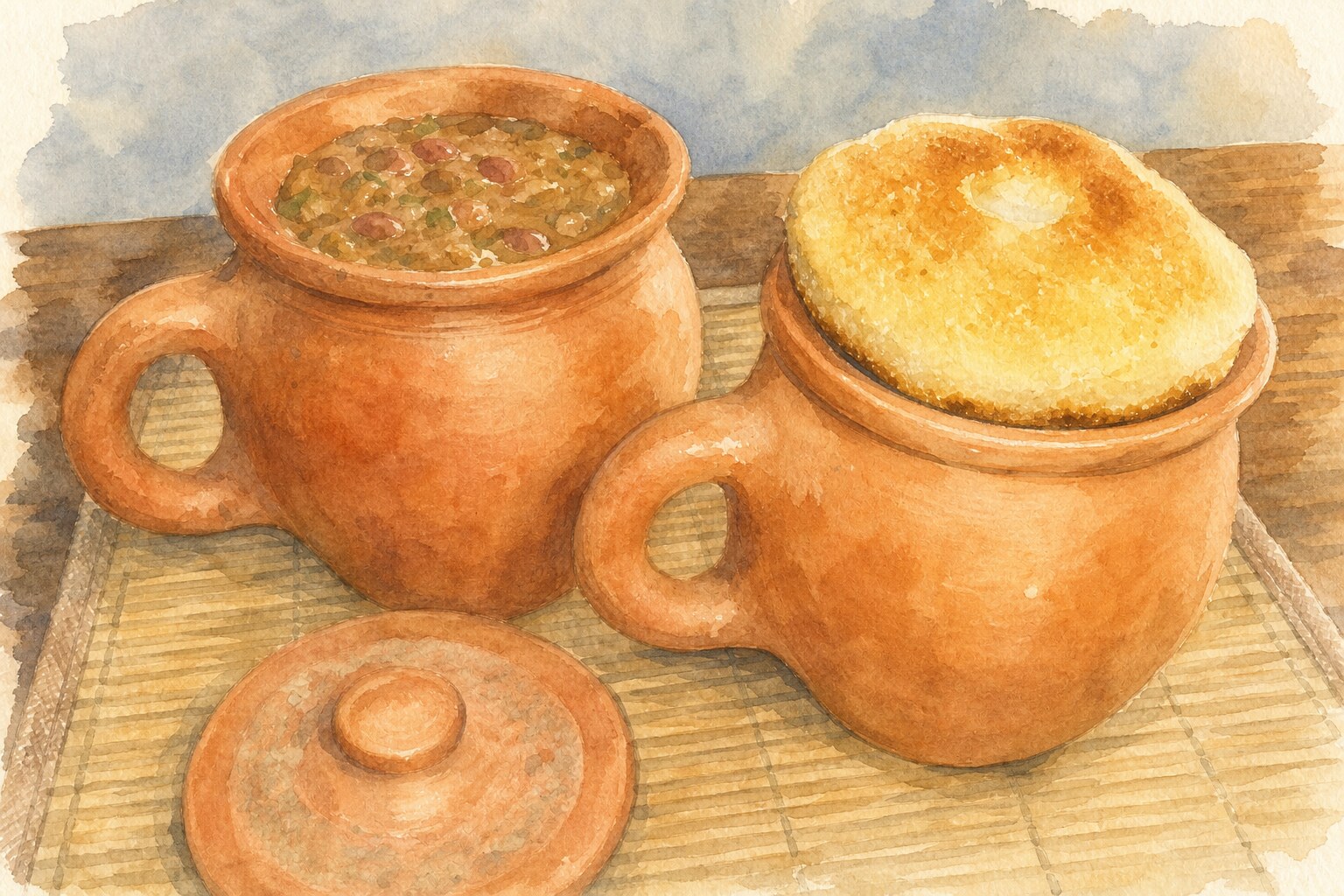
Lobio. Kidney beans stewed with herbs and spices, served warm in a small clay pot. The classic company is mchadi, the cornbread below, plus pickles. Lobio is also everyday home food, the kind of dish a neighbor hands over the fence, and the version at a good restaurant still tastes like that.
Jonjoli. Pickled sprouts of the Caucasian bladdernut bush, dressed simply with onion. Sour and faintly floral, unlike any pickle you have met. It shows up beside the cold starters and cuts through everything rich around it.
Sulguni. The famous cheese of Samegrelo, in western Georgia. Brined and elastic, it gets sliced thick on the cheese plate and melted into half the dishes in this guide. If a Georgian dish stretches, sulguni is usually the reason.
Nadugi. A soft, snow-white whey cheese in the ricotta family, usually mixed with mint and served wrapped in thin sheets of sulguni. Mild where everything around it is loud. Spread it on warm bread.
Mains, stews, and soups
Hot dishes arrive after the cold wave has settled in, and they land on top of it. A home table picks two or three of these. A restaurant menu will have most of them.
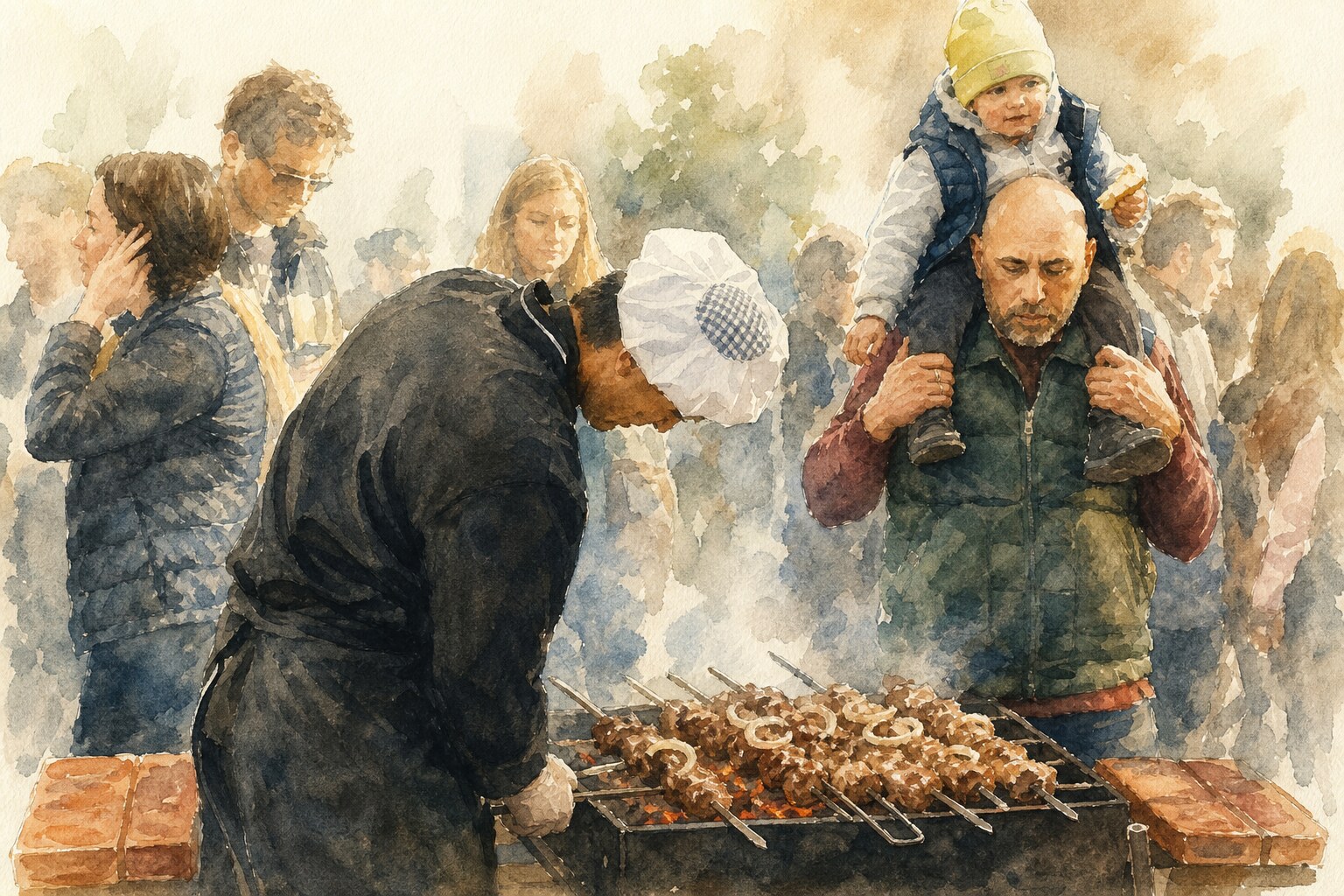
Mtsvadi. Cubes of pork, veal, or lamb grilled on long skewers over open embers. Done properly, the embers are dried grapevine clippings, which is why the best mtsvadi tastes faintly of the vineyard. It comes off the skewer with raw onion, often pomegranate, and a bowl of tkemali for dipping. In Kakheti, mtsvadi over vine wood is close to a religion.
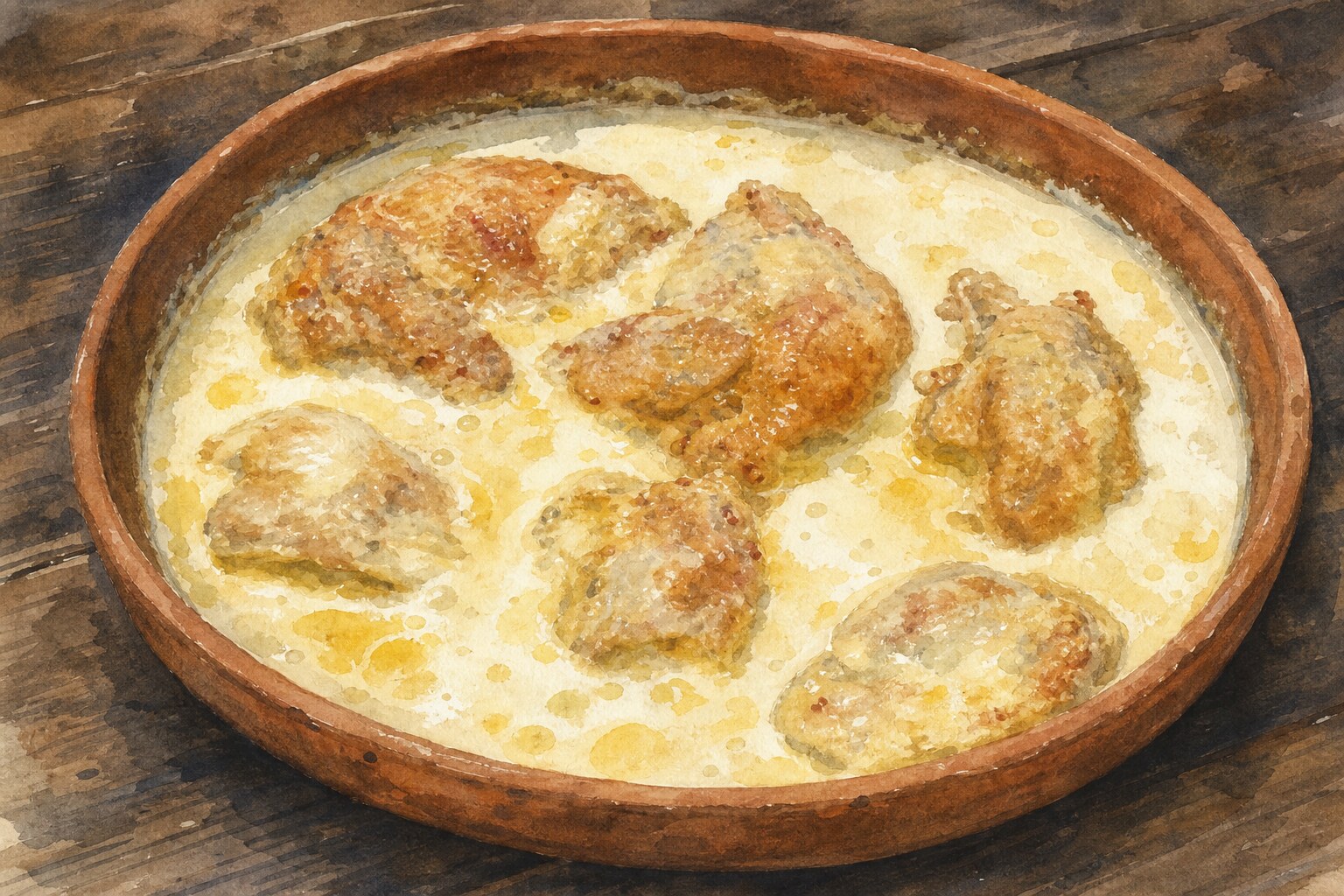
Chkmeruli. Also spelled shkmeruli, after Shkmeri, the village in the Racha region it comes from. A flattened chicken, pan-roasted and then simmered in a sauce of milk and a very serious amount of garlic, served bubbling in the round clay pan (a ketsi) it was cooked in. Order bread for the sauce. You will want all of it.
Chakapuli. Lamb or veal stewed with green tarragon, unripe sour plums, fresh herbs, and dry white wine. It is the definitive spring dish, tied to Easter tables, when the first tarragon and green plums appear. The taste is green and sharp, nothing like the heavy stew the word suggests.
Kharcho. Beef soup thickened with rice and ground walnuts and soured with plum. It lands somewhere between a soup and a stew. This is what to order on a cold Tbilisi day when you want the table to go quiet for a few minutes.
Ostri. Beef stewed in a spicy tomato base. One of the dishes where Georgian cooking does bring real heat, and one of the best things to mop up with fresh bread.
Chashushuli. Slow-cooked beef with tomatoes and a lot of black pepper. Less famous than kharcho or ostri, loved for the same reasons. If you see it on a lunch menu, take it.
Satsivi. Poultry served cold under a thick walnut sauce seasoned with garlic and spices. The name comes from the Georgian word for cold, and the dish anchors winter holiday tables, especially New Year. Rich enough that a little goes a long way.
Khashi. A pale broth of beef parts boiled for hours, eaten early in the morning with raw garlic and bread. Its reputation in the Caucasus is as the morning-after cure. Tripe broth at dawn is not for everyone, and Georgians know it.
Breads, staples, and sauces
Georgian bread culture alone would justify the trip, and the sauces are what tie the whole cuisine together.
Shotis puri. The long, canoe-shaped bread, baked by slapping the dough against the inside wall of a round clay oven called a tone. Corner bakeries sell it straight from the oven, and it is a completely different food warm than cold. If you smell baking bread on a Tbilisi side street, follow it.
Mchadi. Dense cornbread, the everyday starch of western Georgia. On its own it is plain by design. With lobio and cheese it makes one of the oldest comfort-food combinations in the country.
Lobiani. Bread filled with mashed, seasoned kidney beans, like khachapuri’s earthier cousin. The dough is often made with matsoni, Georgian yogurt, which keeps it soft. Georgians eat lobiani year-round, and specifically on December 17, Barbaroba, St. Barbara’s Day, when baking it is the tradition of the day. The Rachuli version, from the Racha region, is the famous one. Warm and cheap, the working definition of comfort food.
Kubdari. The meat bread of Svaneti, the high mountain region in the northwest: chopped, spiced meat sealed inside dough. Heavier than khachapuri, and it means to be. Mountain food for mountain winters.
Elarji. Cornmeal porridge (ghomi) kneaded with a large amount of sulguni until the whole thing turns elastic. Lifted right, it stretches from the pan in long ropes. A Samegrelo specialty, served immediately and very hot, sometimes with bazhe, a cold walnut sauce, poured over the top.
Tkemali. The sour plum sauce, made red or green depending on the plums. It sits where ketchup sits in other cuisines, next to grilled meat and fried potatoes, but it is sharper and fruitier. Most families make their own.
Adjika. The chili and garlic paste of Samegrelo and Abkhazia, in red and green versions, wet and dried. A little goes into stews during cooking, and a small dish of it lands on the table so you can push any plate toward fire at your own pace.
Sweets: churchkhela and the grape-must family
Georgian meals do not build toward dessert the way Western ones do. The sweet finish is usually fruit, something from the grape harvest, and coffee or tea.
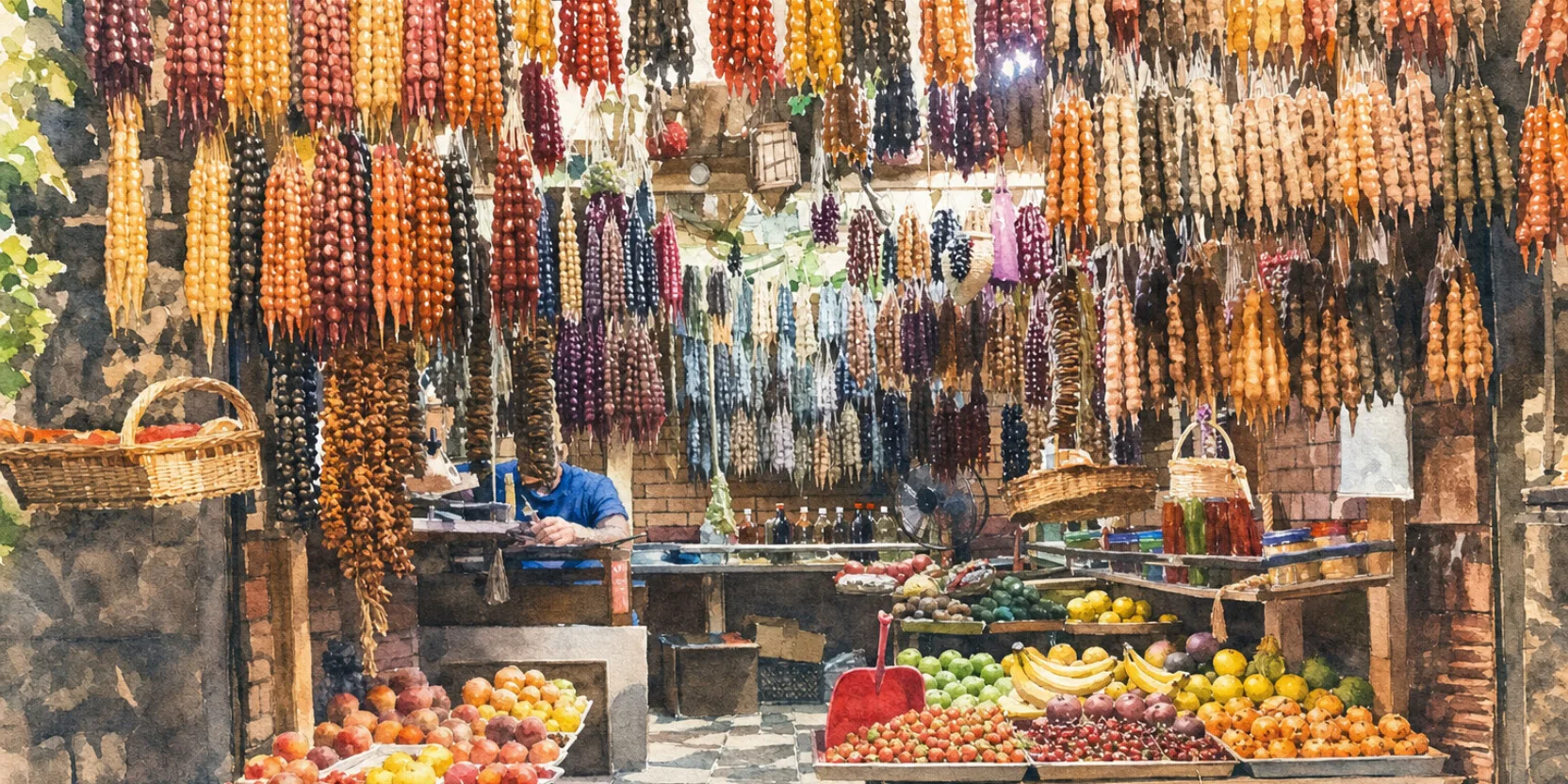
Churchkhela. Walnuts threaded on a string and dipped over and over in thickened grape must until they wear a chewy, candle-shaped coat. It is made in autumn during the grape harvest and keeps all winter, which is exactly what it was invented to do. You will see strings of it hanging in every market. We wrote a full guide to what churchkhela is, because it earns one.
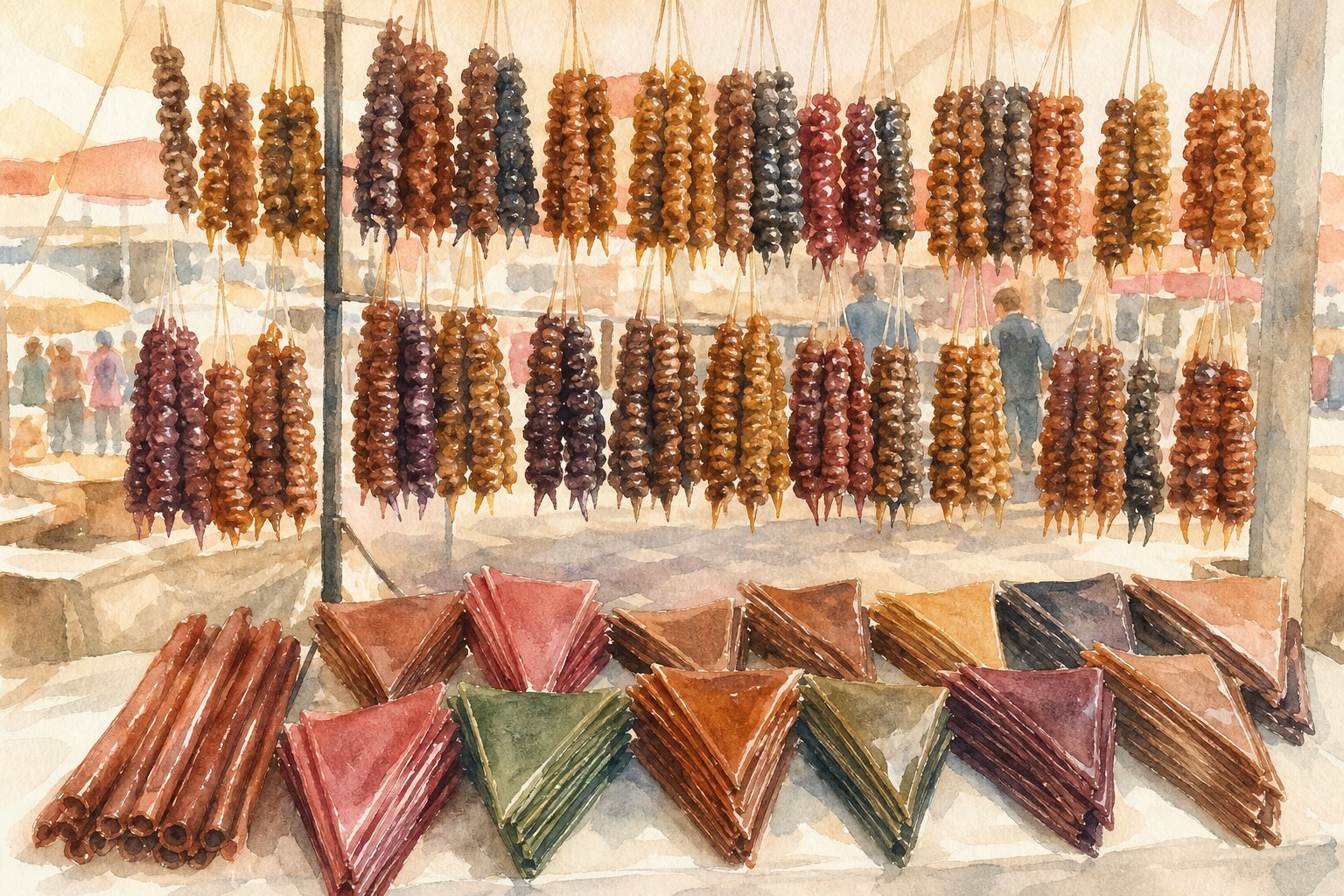
Pelamushi. The same thickened grape must, set with corn flour into a soft, deep-purple pudding. Faintly tart, barely sweet, very Georgian. In western Georgia the churchkhela dipping mixture itself goes by the same name.
Gozinaki. Walnuts caramelized in honey and cut into diamonds, made almost exclusively for New Year. If you are in Georgia around the holidays, someone will hand you a piece.
What to drink with Georgian food
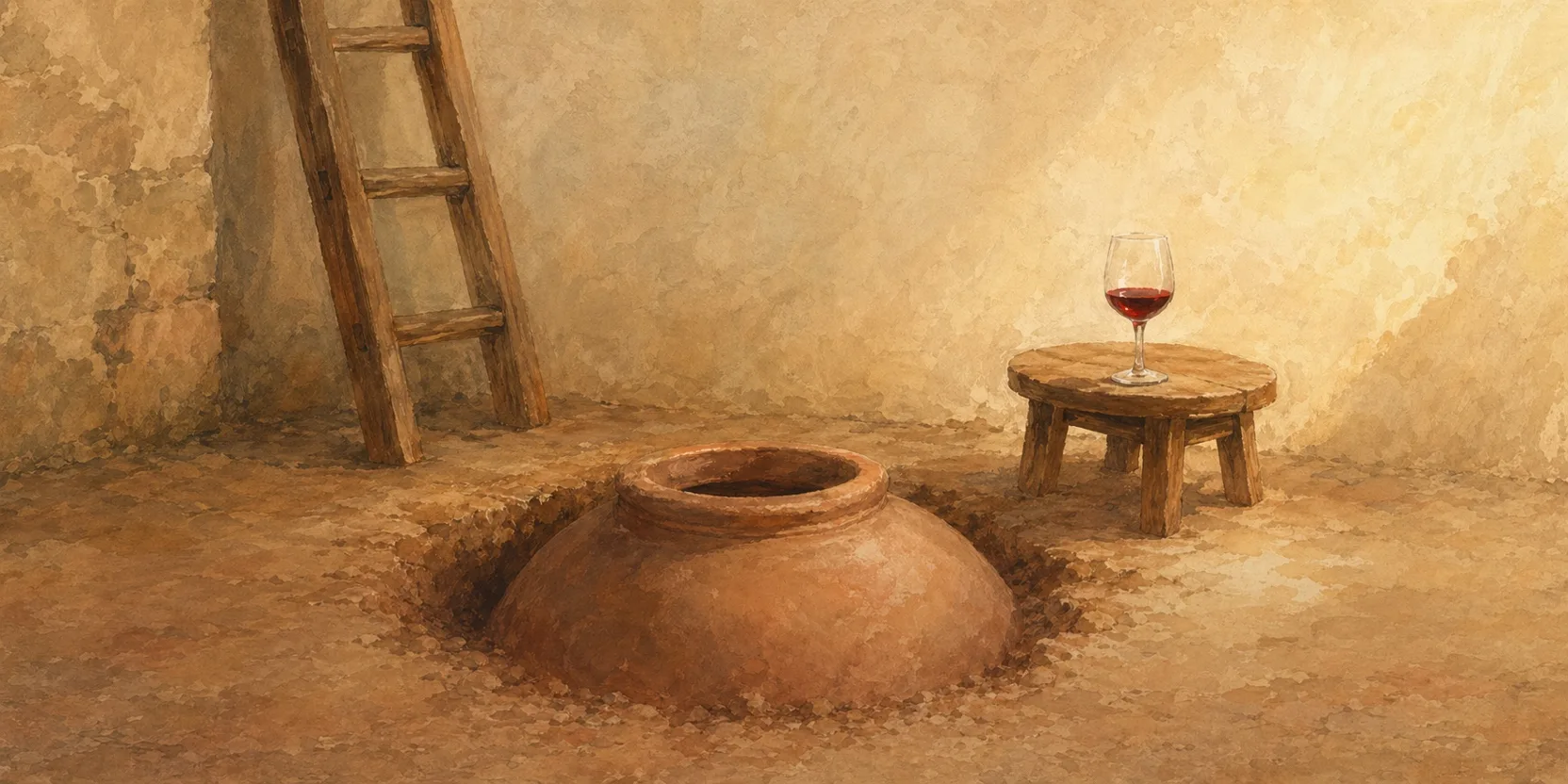
Wine, first and always. Georgia has been making wine for roughly 8,000 years and ferments its traditional wines in buried clay vessels called qvevri, a method UNESCO listed as Intangible Cultural Heritage in 2013. Saperavi is the everyday red, Rkatsiteli the everyday white, and the amber qvevri wines are the ones that convert wine people into Georgia people. Georgian wine deserves its own guide, and has one. At a family table, expect homemade wine poured from a pitcher, and expect to be poured more.
Chacha. The grape brandy, distilled from what remains after winemaking. It appears late in a meal, usually with toasts attached, and it is much stronger than it looks. Our guide to Georgian chacha covers how to survive it gracefully.
Tarkhuna. Tarragon soda, invented by the Georgian pharmacist Mitrofan Lagidze in 1887, in a green that does not occur in nature. Sweet and herbal, it goes weirdly well with khinkali and fried food. Every supermarket fridge in the country has it.
Borjomi. The famous Georgian mineral water, salty and volcanic, from the town of the same name. Georgians treat it as both a drink and a remedy.
Vegetarian and vegan Georgian food
Here is the part that surprises people: this meat-loving, cheese-loving cuisine is one of the easiest in the region for vegetarians and vegans. The reason is the Georgian Orthodox fasting calendar. During fasting periods observant Georgians avoid animal products entirely, so the cuisine developed a full parallel repertoire of vegan dishes, and many restaurants mark them on the menu. The word to know is samarkhvo, fasting food. Ask for it and doors open.
The vegan hits are already on this page: pkhali in all its colors, lobio with mchadi, jonjoli and the pickle plates, mushroom dishes, and breads baked without dairy during fasting seasons. One more deserves its own entry.
Ajapsandali. A stew of eggplant, tomato, peppers, potato, garlic, and herbs, eaten warm or at room temperature. Summer vegetables cooked down into something close to a ratatouille. Fully vegan and on almost every menu.
Vegetarians who eat cheese and eggs, meanwhile, can live entirely on khachapuri. The honest warning: strict vegans should ask about butter and egg washes on breads outside fasting seasons.
How to order Georgian food in Georgian
Tbilisi and Batumi menus usually have English. Outside the cities, less so, and either way the staff’s English often runs out after the menu. This is where even a few words of Georgian change the temperature of the room. Georgians are generous to anyone who tries the language, and a correctly deployed “delicious” buys more goodwill than perfect English ever will.
The one pattern to learn: name the thing, then add tu sheidzleba, the polite “please”. Put erti (one) or ori (two) in front and you can order almost anything. Erti khachapuri, tu sheidzleba. One khachapuri, please. That single sentence shape covers most of a Georgian menu.
Every phrase below is voiced by a native speaker, and each comes from the flashcard deck of our audio course. Tap and repeat.
Ordering
The essential order. Say it anywhere in Georgia and something good arrives. Swap in any menu word you can pronounce.
The counting pattern in action: ori (two) plus the thing plus the polite tag. Beer, by the way, is the standard company for khinkali.
Same shape with erti (one). Useful at lunch and for kids.
How you ask for a Borjomi or any sparkling water. Georgian tables run on mineral water almost as much as on wine.
During the meal
The single most useful sentence in this section. Say it mid-meal, with eye contact, to whoever cooked or brought the food.
The fuller version, with sach’meli (the food) up front. Slightly more formal, perfect when the host is within earshot.
A guaranteed smile at any khinkali house. The verb is the same one Georgians use for loving people.
The word said when glasses raise after a toast. If wine is on the table, you will need it within the hour.
Leaving well
The graceful exit. Same tu sheidzleba pattern, one new word.
For a home table more than a restaurant. Two words, and exactly right when leaving someone’s kitchen.
The full farewell compliment. Two sentences, and worth every syllable of practice. Deliver this after a meal at a Georgian home and watch the invitation to return arrive before you reach the door.
The audio comes from the EasyGeorgian audio course flashcards, so what you hear is what learners train with. If the food ends up pulling you toward the language, which happens to more visitors than you would think, the first lesson of the audio course is free, no signup needed.
Where to start
If it is your first week in Georgia, here is the ordering plan. A plate of pkhali and badrijani to open. Six khinkali from a place that specializes in them. One Imeruli khachapuri for the table, an Adjarian one later in the week. Chkmeruli or chakapuli as the main, depending on the season. A bottle of Saperavi, tarkhuna for whoever is not drinking, and churchkhela from a market stall on the walk home.
Then say dzalian gemrielia to the person who fed you, and mean it.