



I grew up around supras. Not the special-occasion ones tourists get invited to, but the regular Sunday afternoon kind, where my grandmother made the bread, my aunts argued over the pkhali, and the food kept arriving for hours. So I want to walk you through what’s actually on a Georgian table at a proper feast, in the order it tends to appear.
You will not finish all of it. That is fine. The supra was not built around the idea that anyone would.
The cold starters (they stay all night)
The first wave is what a Georgian table starts looking like, and these dishes never leave once they arrive. You’ll be picking at them four hours later.
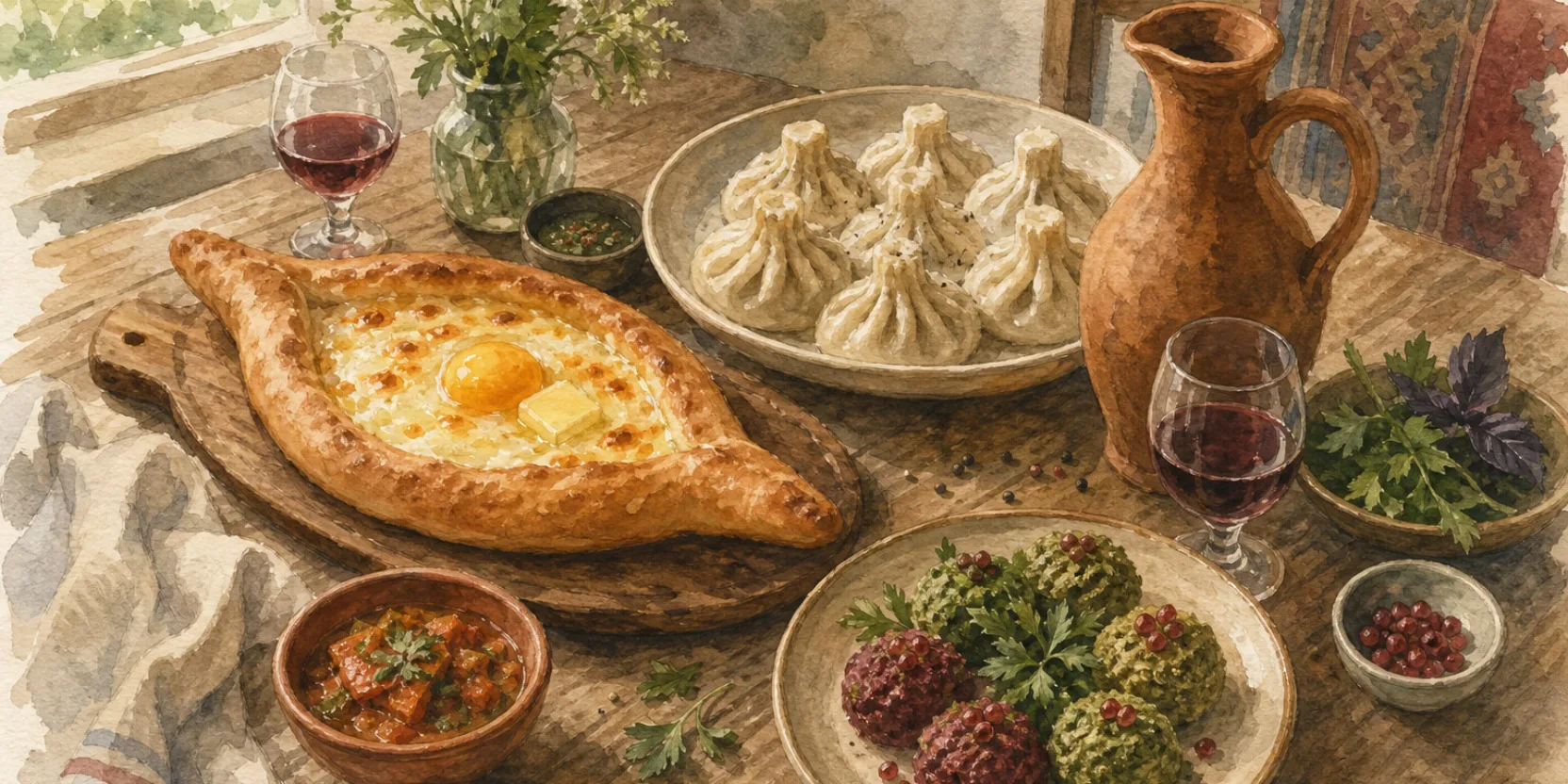
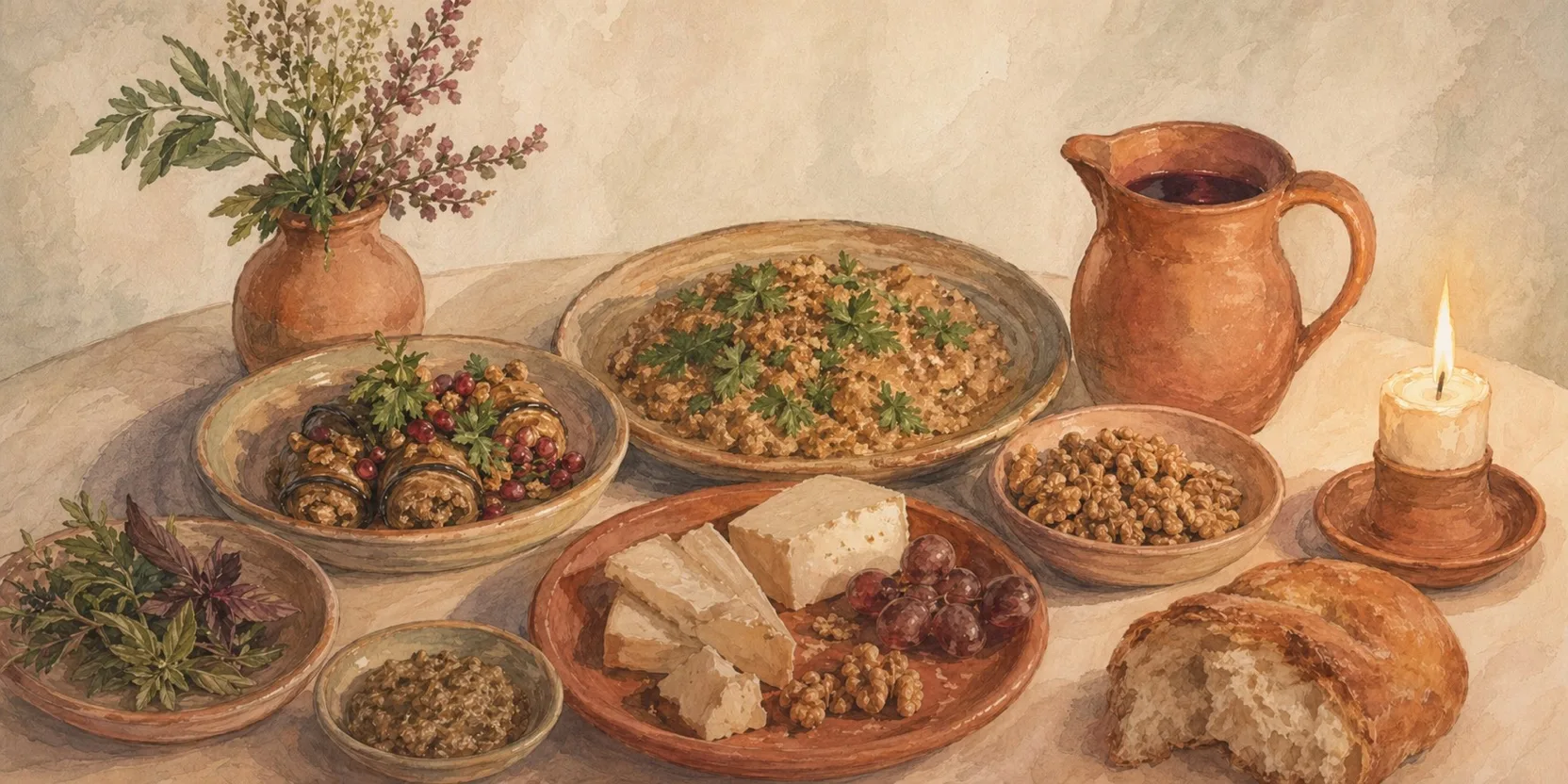
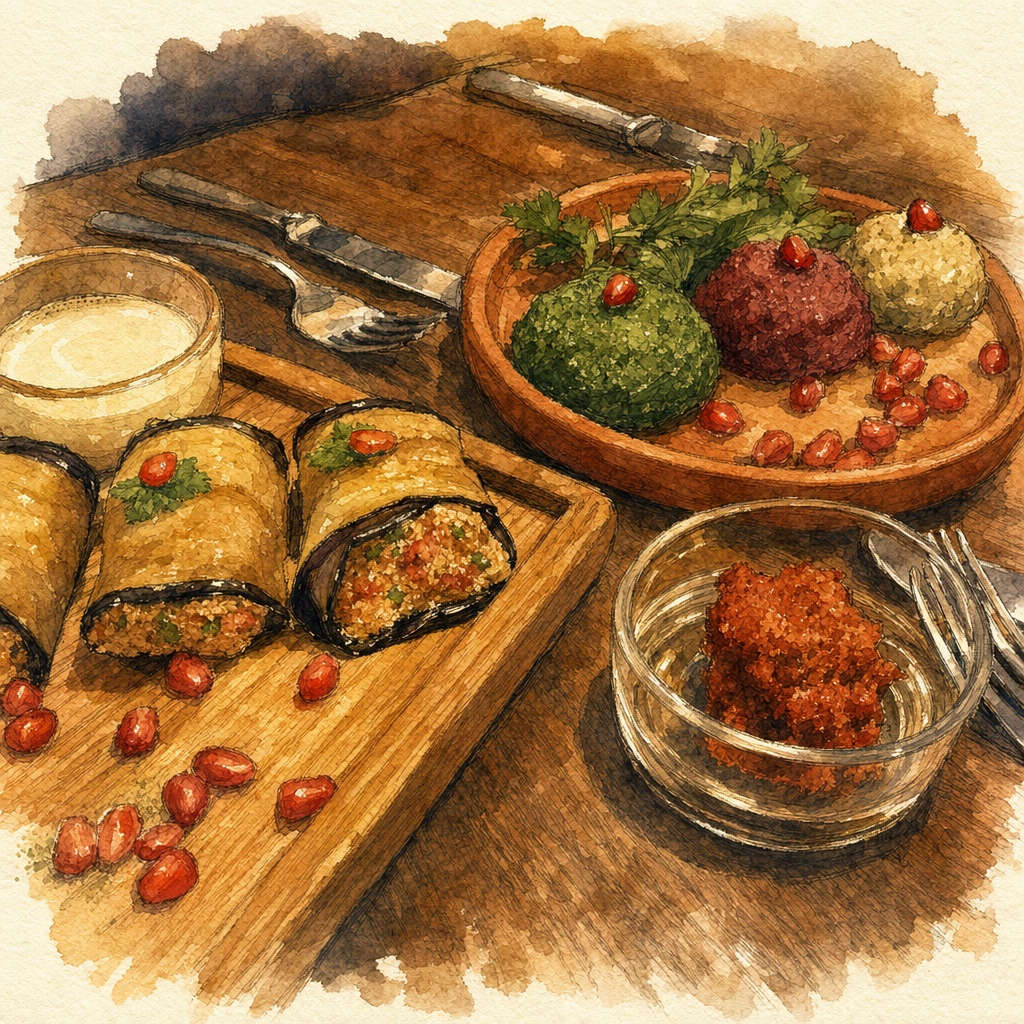
Pkhali. Cooked vegetables (spinach, beetroot, leek, beans) finely chopped and bound with a paste of walnuts, garlic, vinegar, coriander, and a special blend of dried marigold and other spices called khmeli suneli. Served as small mounds, often in three colors on one plate (green, red, white). Eat it on bread.
Badrijani nigvzit. Aubergine slices, fried, then rolled around a similar walnut paste, finished with pomegranate seeds. The most photographed Georgian appetizer, and rightly so.
Lobio. A bean stew, usually served warm or at room temperature, depending on the version. Red beans, herbs, a savoury broth. Often served in a small clay pot with a piece of mchadi (cornmeal flatbread) tucked beside it. Comfort food, but supra-grade.
Cheeses. Salted Georgian cheeses (sulguni, imeruli) sliced thick. Usually paired with fresh herbs (tarragon, basil, dill, mint) on the same board.
Fresh herbs. Not as a garnish. As a side dish, in their own right. A pile of them, eaten raw, with cheese or with bread.
Bread. Usually shotis puri, the long Georgian bread baked in a clay tone oven. Or mchadi, cornbread, especially in western Georgian families.
This whole first wave is what you eat through the toasts. Pace yourself.
The hot mains (they keep coming)
Once the toasting has settled into rhythm, the hot dishes start arriving. Plates pile on top of plates. Nothing leaves the table.
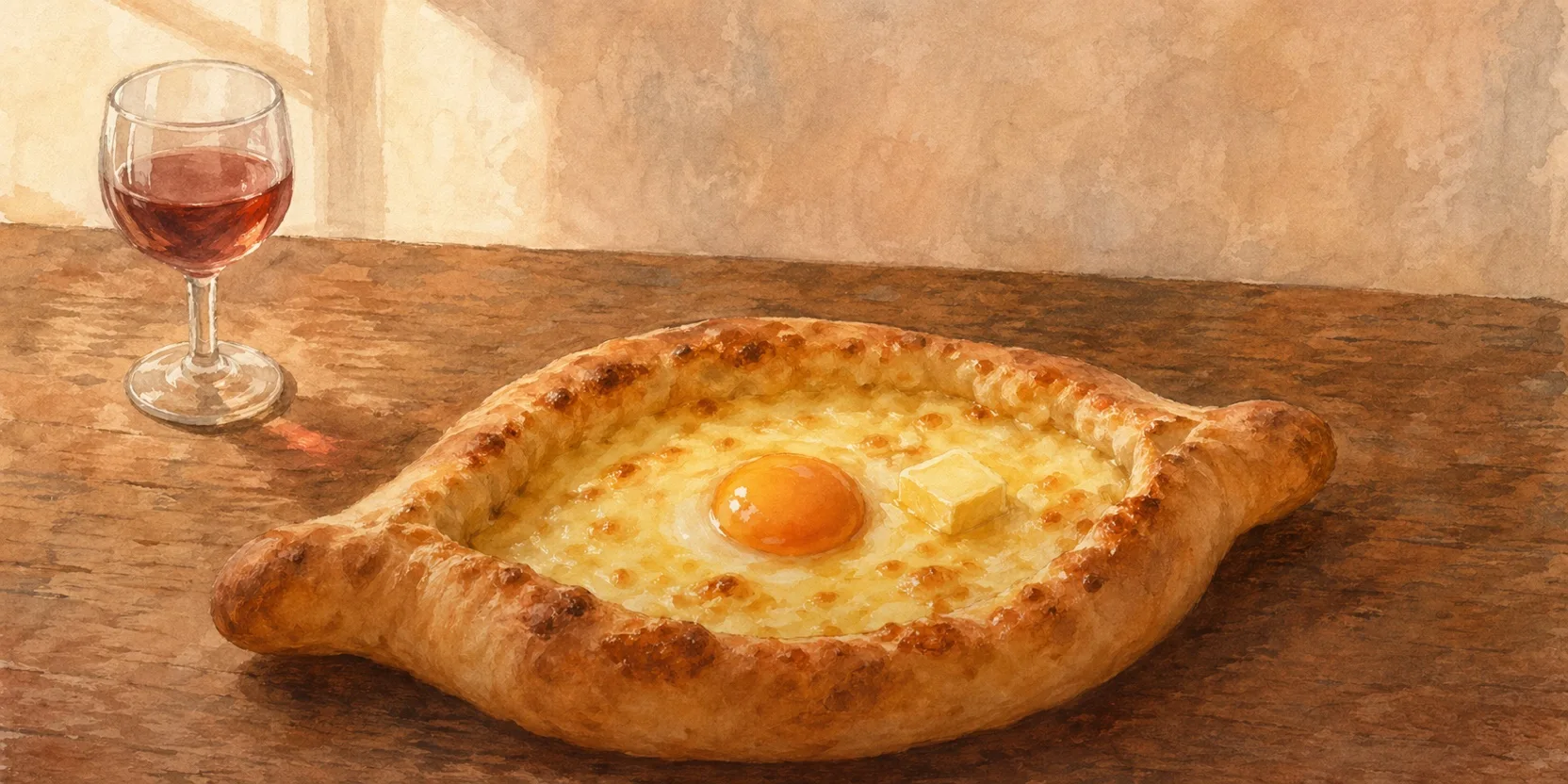
Khachapuri. Cheese bread. Almost always imeruli (round, closed pie) or adjaruli (boat-shaped, with egg and butter). One per few people. Eat it hot.
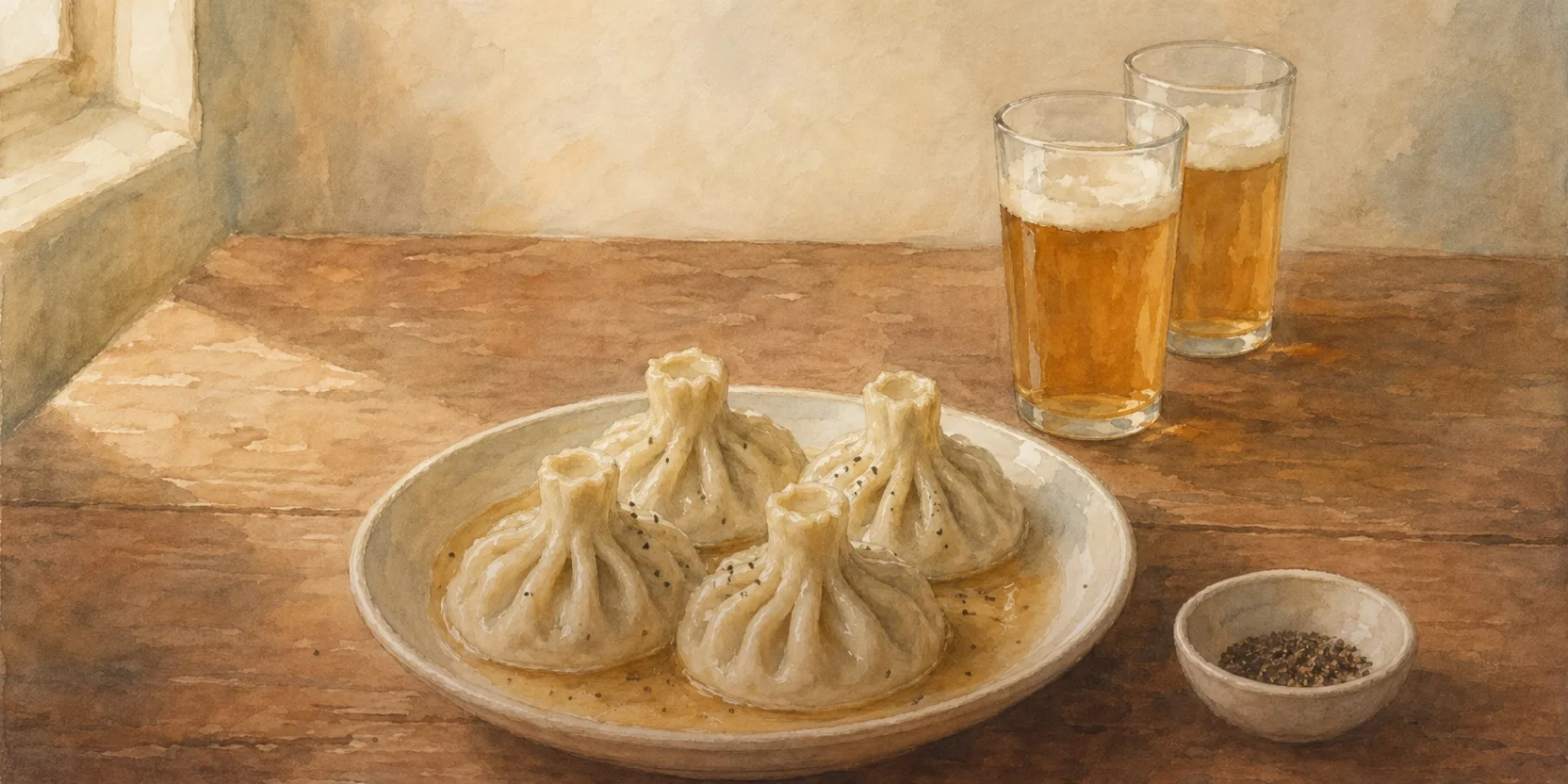
Khinkali. Soup-filled dumplings, eaten by hand. Usually arrive on a large platter, in a single layer (stacking them tears the dough). There’s a separate guide on how to eat them. The short version is don’t cut them with a fork and don’t eat the knot.
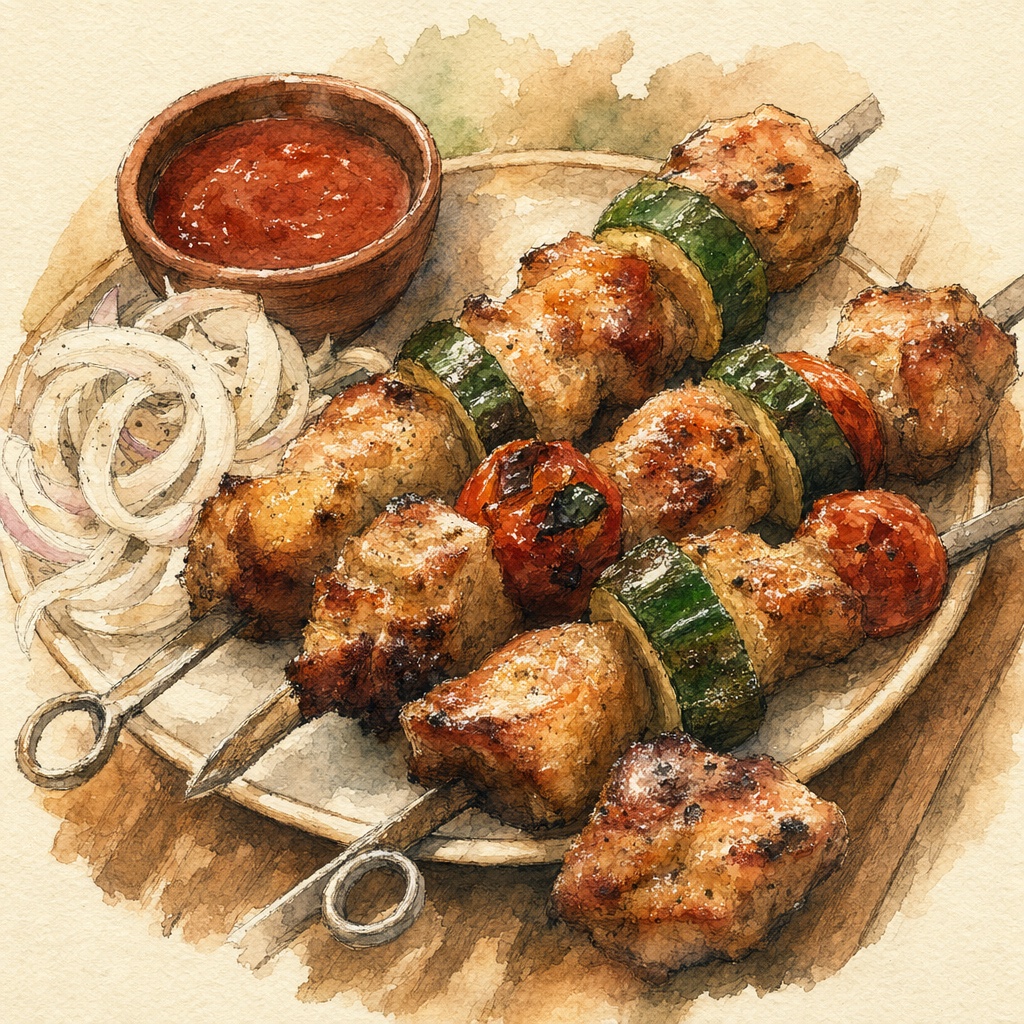
Mtsvadi. Grilled meat on a sword-sized skewer. Pork or lamb, sometimes beef. Cooked over grapevine wood when the host has gone to the trouble. Served with sliced onion and a small bowl of tkemali (sour plum sauce) for dipping.
Chakapuli. Lamb stew, with green tarragon, dry white wine, and unripe sour plums. A spring dish, but available year-round if the host has ambitious tarragon stocks. One of the great Georgian dishes.
Ostri. Spicy beef stew. Tomatoes, garlic, paprika, herbs. Heavy and warming.
Satsivi. Cold turkey or chicken in a thick walnut sauce. A New Year’s classic. Heavy. Don’t fill up on it early in the night.
Chashushuli. Beef stew with tomato and lots of pepper. Less famous, just as good.
A typical supra will have three or four of these, not all of them. The hosts pick.
The sweet finish
Toward the end of the night, when the toasting has slowed:
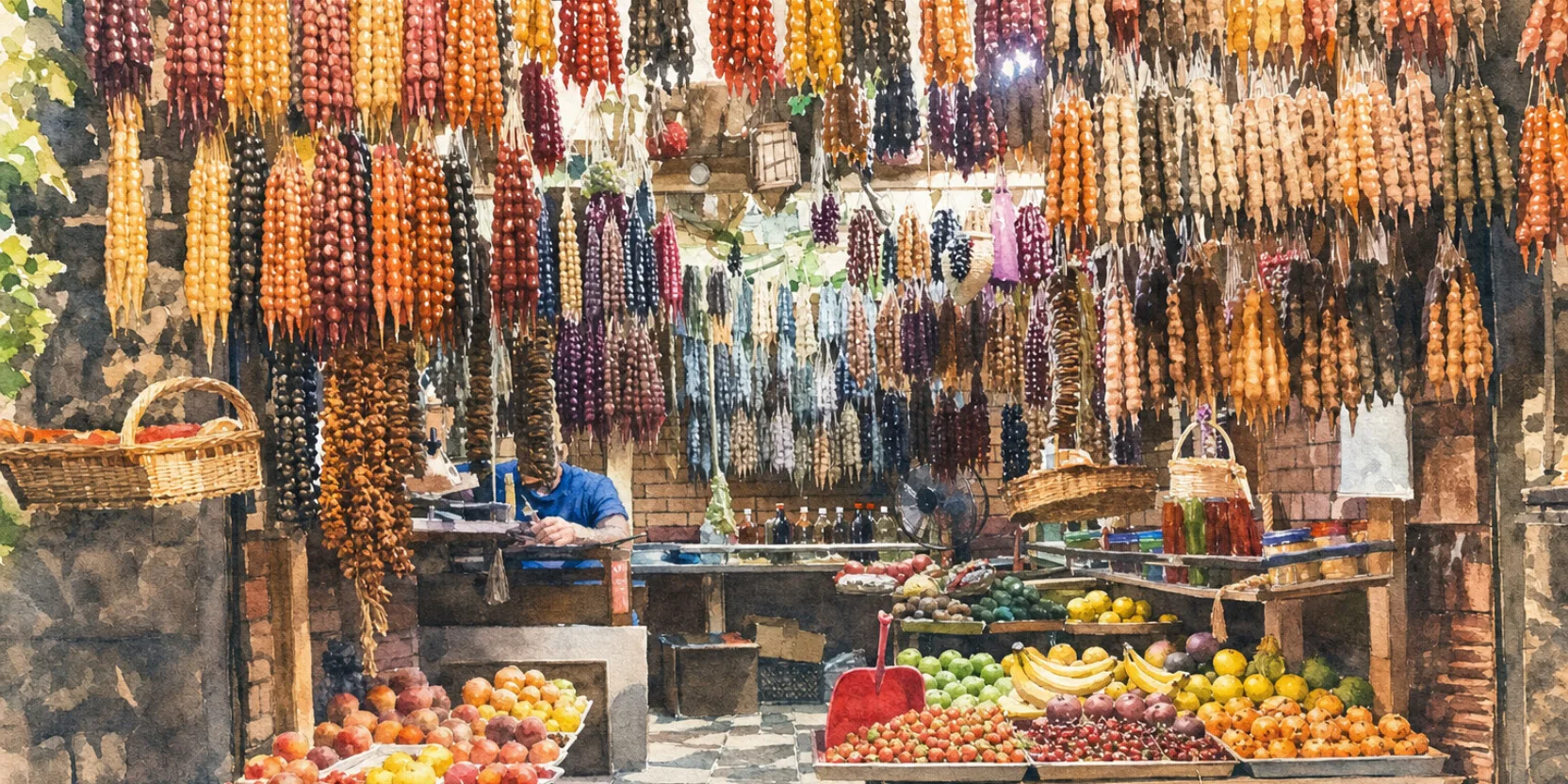
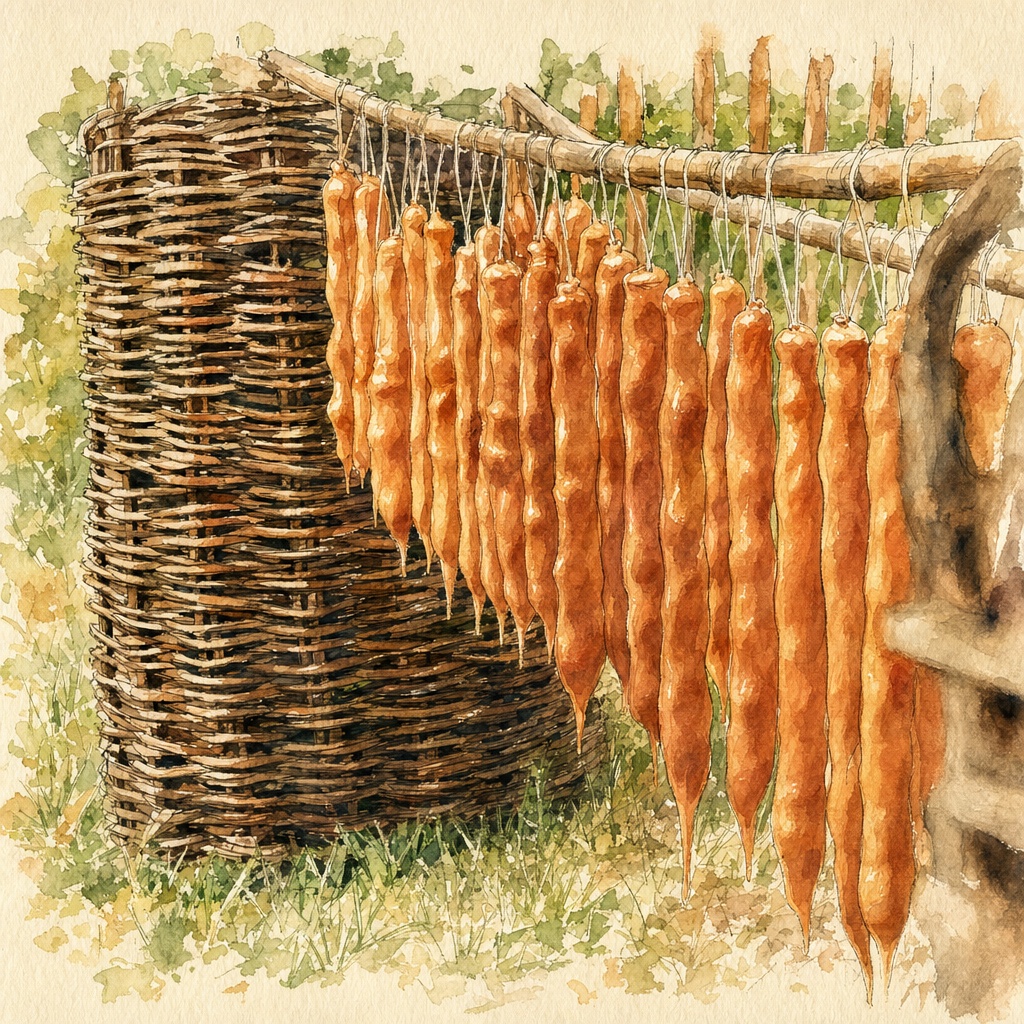
Churchkhela. Walnuts on a string, dipped repeatedly in thickened grape juice, dried, sliced into rounds. Looks slightly alarming, tastes like an old-world energy bar. Often what travels home with the guests.
Pelamushi. A jelly-like sweet made from grape must and corn flour. Soft, faintly tart, very Georgian.
Honey cake. Layered, soft, somewhere between Russian and Georgian baking traditions.
Fresh fruit. Whatever’s in season. Pomegranate seeds in autumn, apricots in summer, mandarins in winter from the Adjarian coast.
Wine, the whole night through
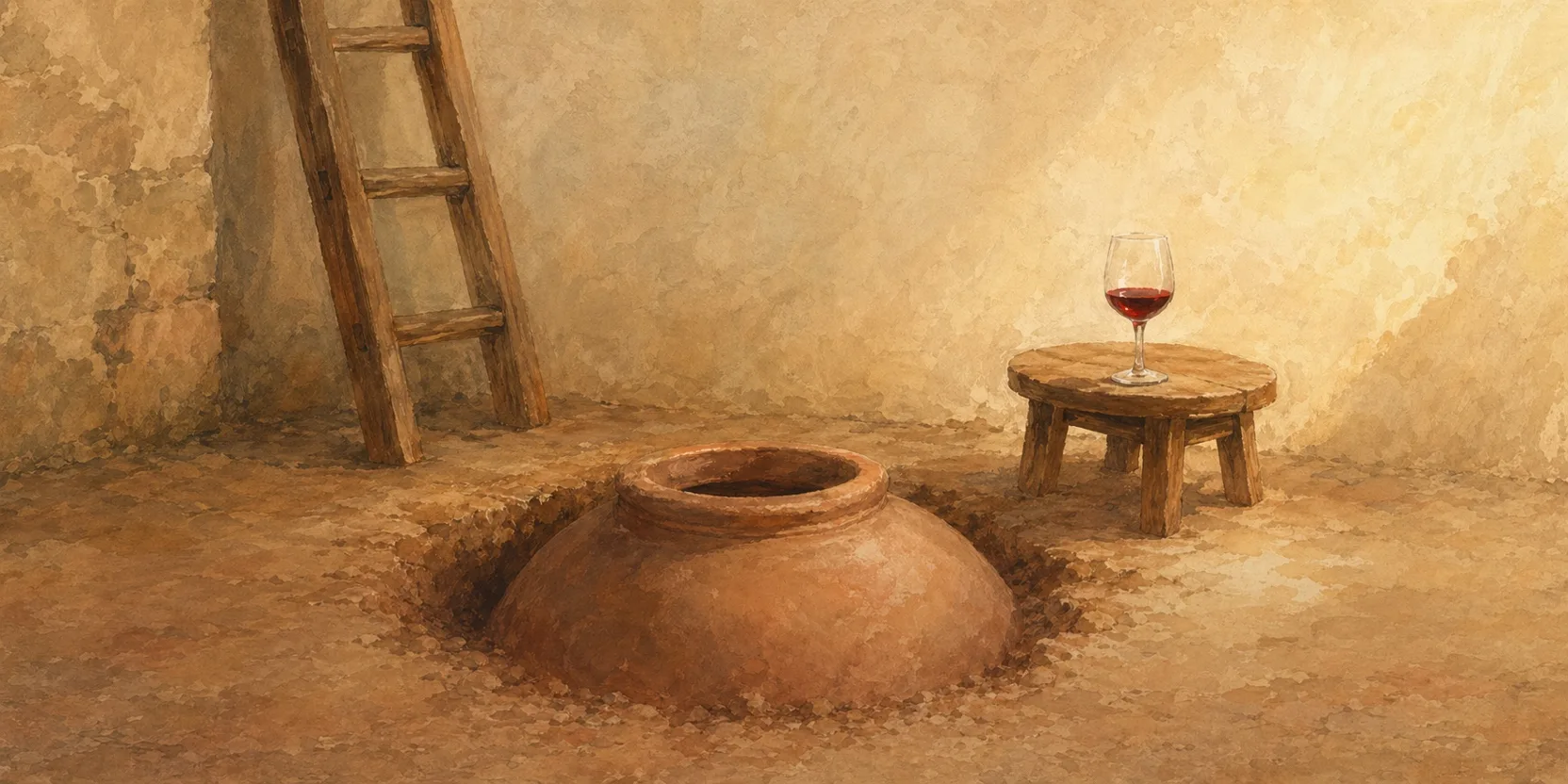
Wine is not a course. It is on the table from the first toast to the last. Almost always Georgian wine, often homemade by the host, poured from a clay pitcher. Saperavi (red), Rkatsiteli (white), and the qvevri amber wines are the classic three categories. Glasses are poured continuously by whoever is closest to the pitcher.
Toward the end, chacha (Georgian grape brandy) often appears for the late toasts. It is much stronger than it looks. Pace it.
A few notes from the inside
- Don’t compliment any single dish to the exclusion of others. Compliment the table. The whole supra is the achievement.
- The grandmother who made the food will refuse the compliment. Press it gently anyway. She’ll relent.
- If a child is at the table, they’ll be eating the same food the adults are. Georgian cuisine is not “kids’ food” and “adults’ food.”
- Leftovers will be sent home with you. The host will press containers of food into your hands at the door, full of whatever they cooked too much of. Refusing politely will make it worse. Just take the food.
- Don’t arrive early to help. Georgian hospitality is firm about this: guests are guests, and the host will be deeply uncomfortable if you try to wash a dish before the meal. Arrive on time or slightly late (“Georgian time”) and let yourself be hosted.
That’s what’s on the table. The food is the smaller half of the night, but the table is the site where everything else happens, and the dishes carry weight that takes years of supras to fully feel.