
I married into a Georgian family, and this summer my brother does too, with a Georgian wedding celebration up in Kazbegi that my Danish family is flying in for. So Georgian weddings are not an abstract subject in my house. They are a recurring, joyful, slightly overwhelming fact of life.
If you have been invited to one, or you are marrying into a Georgian family yourself, here is what to actually expect. Georgian wedding traditions vary a great deal, and this post is honest about that. But the shape of the thing is consistent, and the shape is worth knowing before you walk in.
What a Georgian wedding is like
Three words cover most of it: large, warm, and long.
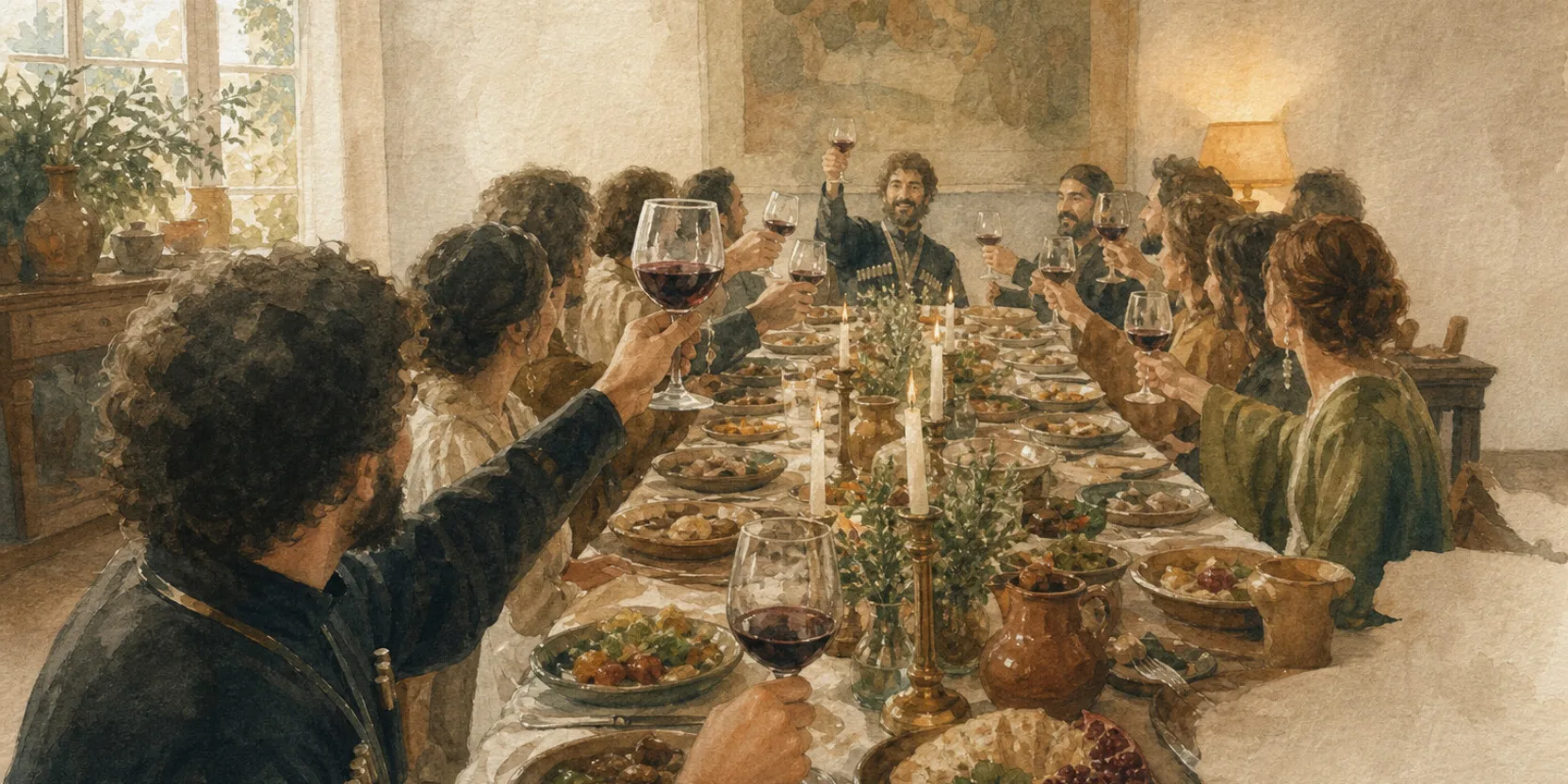
A Georgian wedding is a big event, often a very big one. It is generous with people, generous with food and wine, and generous with time. The reception is not a dinner with some dancing afterward. It is a full Georgian feast, a supra, with everything that implies, and it runs for hours.
If you are coming from a culture of tightly-managed guest lists and weddings that wrap up by midnight, the scale and the stamina of a Georgian wedding will surprise you. Lean into it. The size is not excess. It is the form the warmth takes.
The scale: a lot of people are invited
The first thing that strikes most foreigners is how many people are there.
Georgian weddings traditionally invite widely. Extended family, family friends, colleagues, neighbors, the circles around the couple’s parents as much as the couple themselves. Guest counts well into the hundreds are normal, and a large wedding is not seen as showing off. Inviting someone is an act of warmth, and leaving someone out is the thing that needs a reason.
For a foreign guest, this has a practical upside: you will not be conspicuous. At a wedding of that size, the foreign guest who does not speak much Georgian is absorbed easily into the crowd and the goodwill. You are one warm face among many.
Before the wedding: the traditional path
Traditionally, a Georgian marriage formed in stages rather than as a single event. The older pattern moved through matchmaking, then a betrothal or engagement, then the wedding itself, each a recognized step with its own gathering and its own meaning.
In rural and more traditional families, some of that structure is still kept. In modern urban Georgia it is usually compressed: a couple meets on their own, the families meet each other, an engagement is marked, and the wedding follows, with the older formal stages softened into something close to how engagements work across much of the world.
It is worth knowing the pattern exists, because you may hear the stages referred to, but do not expect a rigid sequence. Like nearly everything around a Georgian wedding, how much of the old path is followed depends on the family.
The ceremony
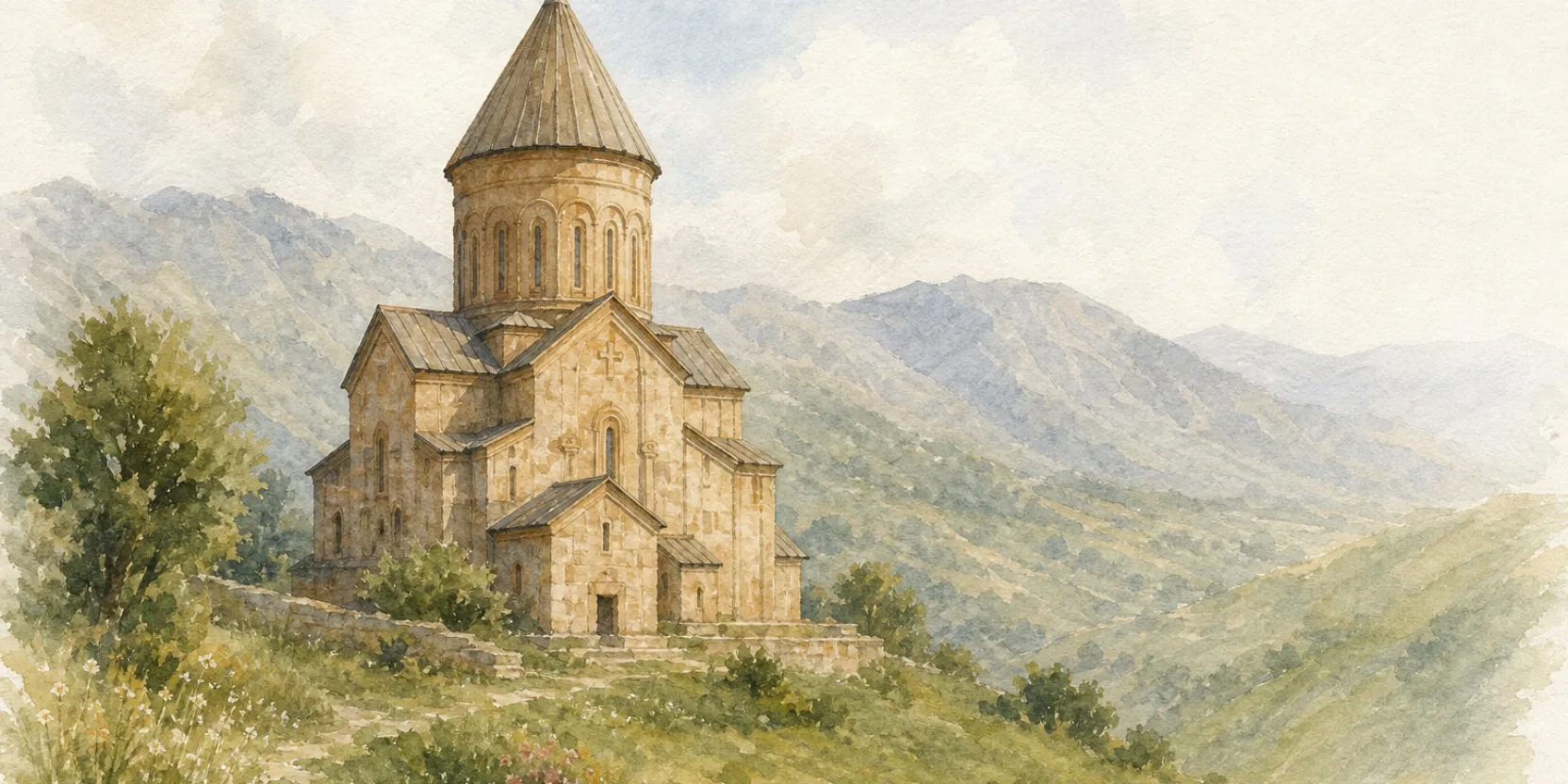
Many Georgian couples have an Orthodox church wedding, and it is worth knowing the shape of it if you will be there.
The Orthodox wedding service is unhurried and rich in symbol. Its most recognizable moment is the crowning: the couple are crowned during the ceremony, a central image of the Orthodox rite. There is no exchange of spoken vows in the Western sense. The service itself, the prayers, the crowning, the procession, carries the meaning. It takes place in a church, often one of the beautiful old ones, and it can be quite short compared to the reception that follows.
Not every couple marries in church. Some have only the civil registration, some combine the two, and the religious side is a personal choice rather than a universal step. If you are invited specifically to a church ceremony, dress modestly, the same norms as visiting any Georgian church apply, and follow the lead of the people around you.
The reception is a supra
Here is the single most useful thing to understand. A Georgian wedding reception is a supra.
That means it has all the structure of the Georgian feast. There is a tamada, a toastmaster, who leads the room through a sequence of toasts, and at a large wedding he may appoint vice-tamadas to carry the toasts at tables further from the head. The food arrives in endless waves and the wine does not stop. The evening is paced by toasts, to the couple, to their parents, to family, to the future, to the guests.
If you have read our guide to what a Georgian supra is, you already know the etiquette, because it is the same. You drink with the toasts, a sip is enough, you do not have to keep pace. You do not toast yourself. You keep something on your plate. You settle in, because this runs for hours. The tamada and the toasts are the spine of the night, exactly as they are at any supra, just scaled up to a wedding.
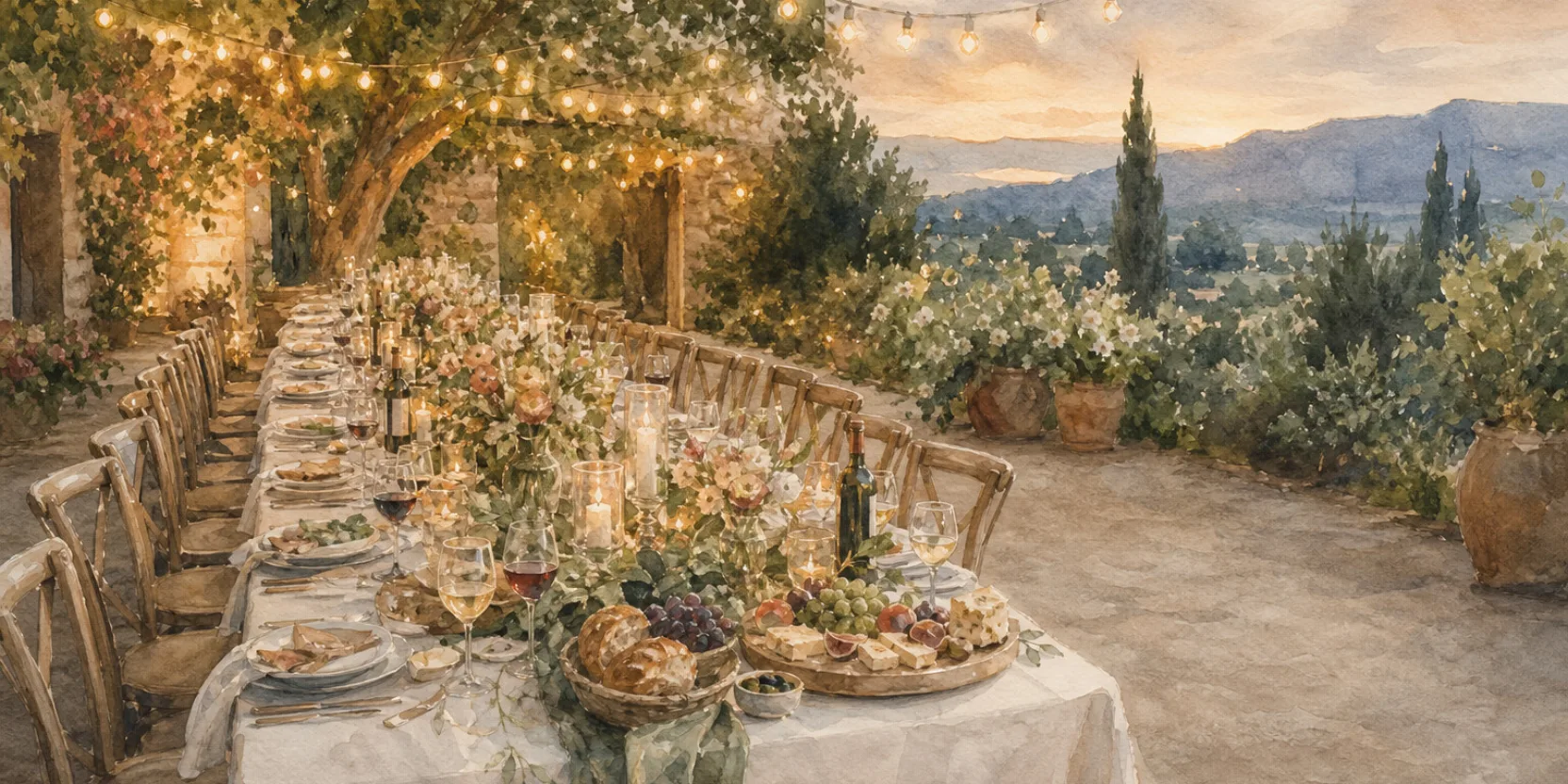
The food is the full Georgian spread, and at a wedding it is relentless. Cold starters cover the table first, walnut-paste vegetables, fresh herbs, cheeses, breads, and they stay there as the hot dishes keep coming on top: grilled meats, stews, supra food in abundance. Nothing is cleared. The plates pile up, the wine is refilled before you notice it is low, and the only real mistake a guest can make with the food is pacing it as if it will run out. It will not.
If this is your first Georgian feast of any kind, our piece on your first supra answers the nervous-guest questions in more detail, and all of it applies at a wedding.
Music, dancing, and the drive through town
A Georgian wedding is loud in the best way.
There is music throughout, and there is dancing, a mix of traditional and modern as the night goes on. You may see the kartuli, the elegant traditional Georgian couple’s dance, performed at some point, the kind of thing that makes a room go quiet and then erupt. As the evening loosens, the dancing opens up to everyone, and a foreign guest is very much expected to join rather than watch.
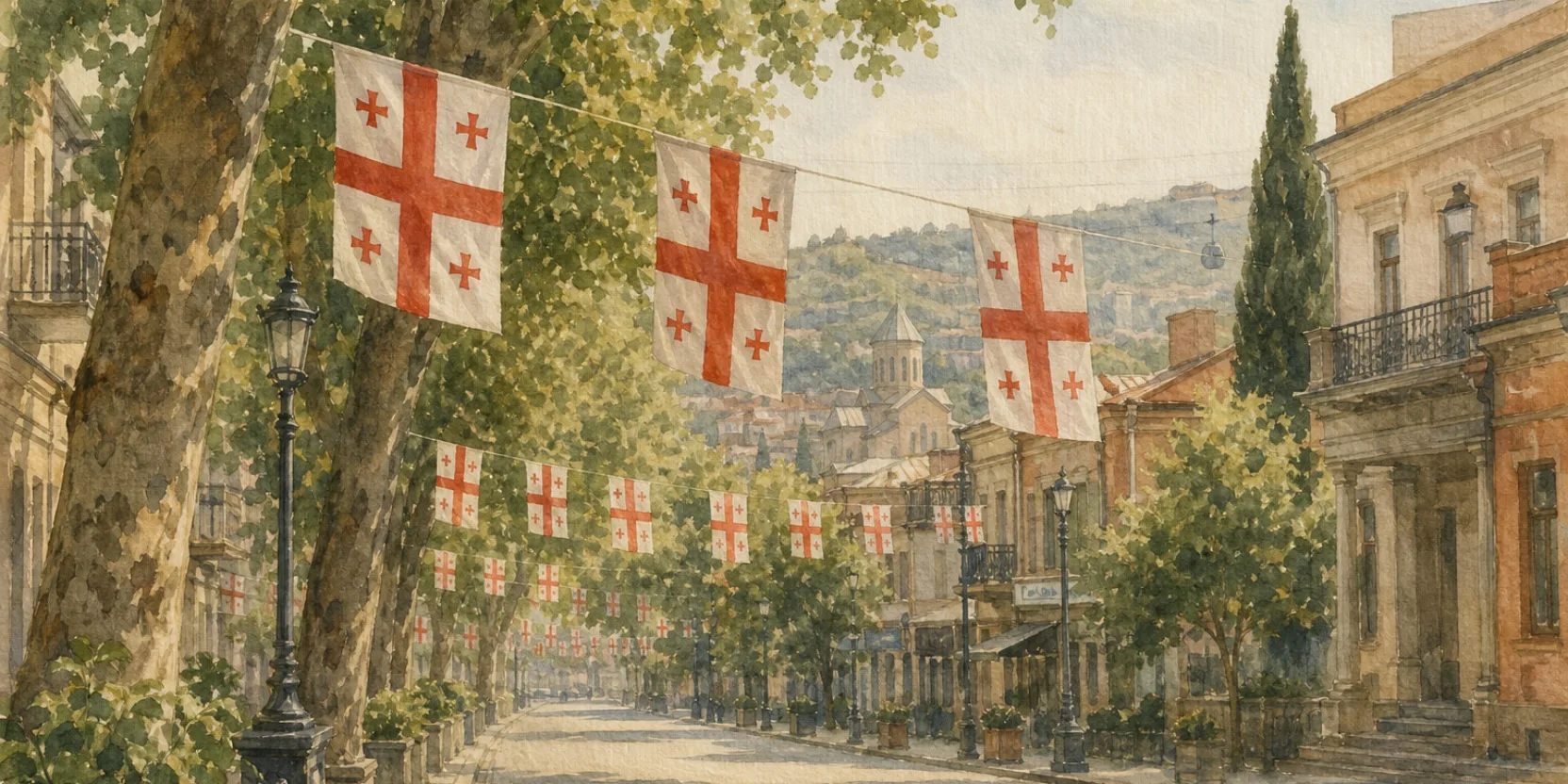
You may also catch the wedding on the move. Georgian wedding car processions are a genuine feature: a line of cars driving through town, horns going, sometimes flags out of the windows, announcing the day to the whole city. If you are in Tbilisi on a weekend in wedding season and a convoy of honking cars goes past, that is what you are seeing.
There is supra singing too, often the layered three-part harmony Georgia is known for. Between the toasts, the songs, and the dancing, a Georgian wedding gives you a concentrated dose of the culture in a single night.
What to wear and what to bring
A few practical notes for a foreign guest.
Dress smartly. A Georgian wedding leans formal, and you will not be the overdressed one. If there is a church ceremony, the modest-dress norms apply there, covered shoulders and knees, and a head covering for women, so plan an outfit that works for both the church and the party.
As for a gift, money is a common and entirely accepted wedding gift in Georgia, given to help the couple start their life and easier than guessing at a registry that may not exist. If you would rather give an object, that is fine too. When in doubt, a Georgian friend or the person who invited you will tell you what is normal in that family.
Arrive on the early side rather than late, and arrive ready for the long night, because once the supra starts you are there for its duration. And come hungry. Turning up with an appetite is the one piece of preparation for a Georgian wedding that nobody ever regrets.
How much of this varies
Now the honest part, the part the lists of “Georgian wedding customs” tend to skip.
Georgian weddings vary enormously. They vary by region, by whether the family is religious or secular, by generation, by budget, by whether it is a village wedding or a big-city hotel event. Older customs are kept fully by some families, lightly by others, and not at all by others again. A modern Tbilisi wedding in a large venue and a traditional wedding in a mountain village are both completely Georgian and look quite different.
So treat any account of Georgian wedding traditions, including this one, as the general shape rather than a fixed script. The reliable constants are the ones above: the scale, the warmth, the feast-shaped reception with its tamada, the long night. The specific rituals around those constants are where families differ, and the only rule that always holds is that the real way to do it is however the hosting family does it.
If you are marrying into a Georgian family, or simply heading to your first Georgian wedding, the best preparation is not memorizing customs. It is being ready to be fed, toasted, and pulled into the dancing, and being warm in return. And if the night makes you want to follow what is being said in all those toasts, our guide on learning Georgian is where that starts. A wedding is a wonderful reason to want the language.