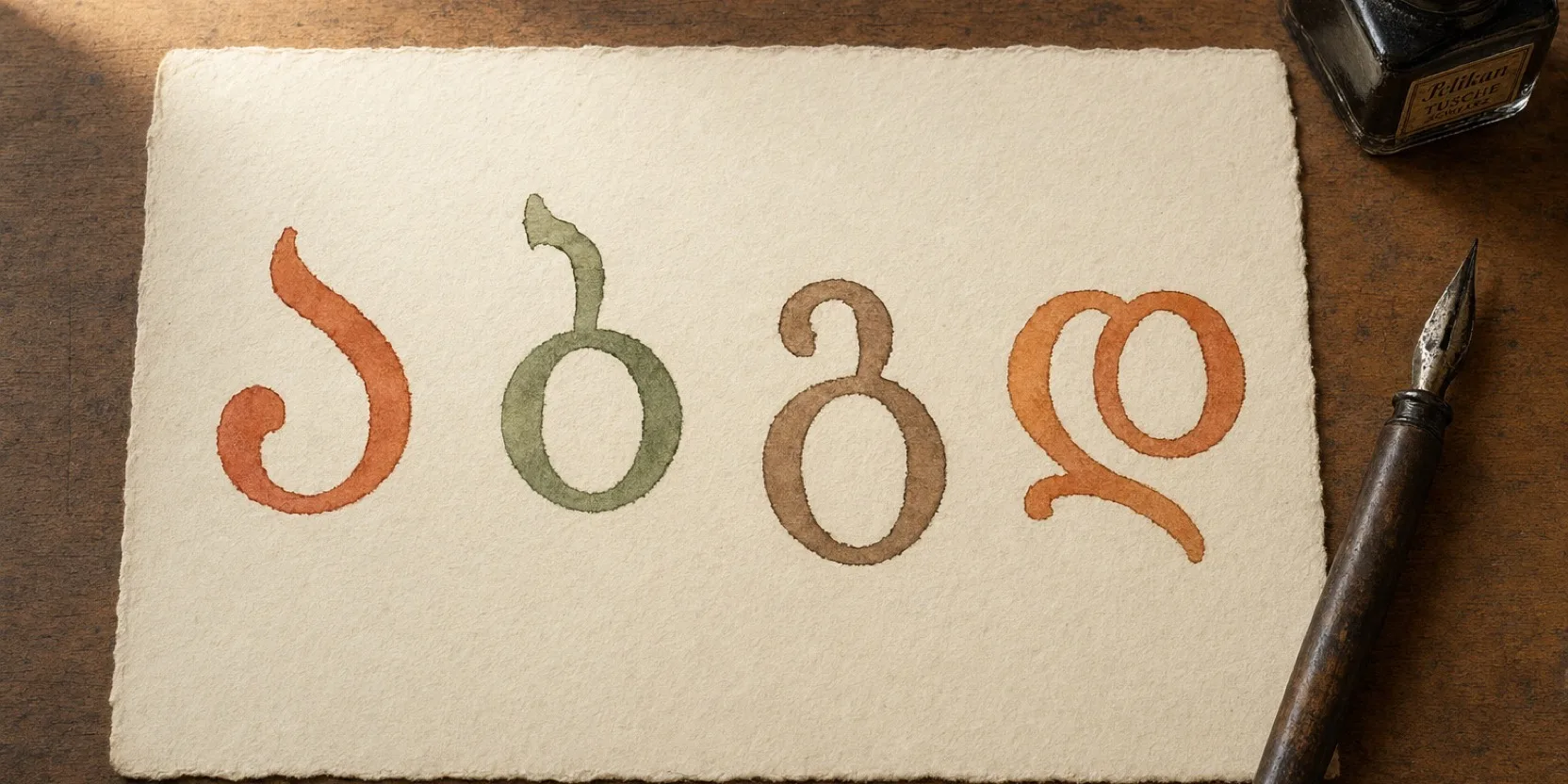




Georgian reading practice has a strange shape. The first step is fast: the 33 letters take an afternoon, and because Georgian is written the way it sounds, you can sound out any word on any sign by the end of the day. The next step is slow. Sounding out a word is not the same as reading it, and the gap between the two is all about words you already know.
So the plan below is built on one idea: read what you have already heard. It works at every level, and it keeps reading and listening helping each other instead of competing for your time.
Step 1: learn the letters
There is no reason to spend more than a day here. The Georgian alphabet has 33 letters, no capitals and no silent ones, and every letter always makes the same sound. Our free alphabet tool teaches all of them in ten short levels, using words you already know, and ends on real Tbilisi street signs that Tamar and I photographed.
Do not chase perfect pronunciation at this stage. Some letters, the ejectives in particular, take months of listening to settle, and that happens in the audio, not on the page. Rough recognition is the goal. Our guide on whether to learn the alphabet first explains why an afternoon is enough.
Step 2: read words you already know
This is where most learners get stuck. They can sound out ქართული letter by letter, and it means nothing until they realize it is kartuli, Georgian, a word they have heard a hundred times.
The fix is to read words you know by ear. Every time the sound is already in your head, reading becomes recognition, and recognition is fast.
- Flashcards with the script. Our flashcards show every word in Georgian letters with audio, so you see the word and hear it at the same moment. The first 100 cards of the 5,000 most common Georgian words deck are free.
- The Georgian word of the day. The daily email brings one word each morning, in script, with its pronunciation, an example sentence and audio. Small, but it adds up.
- Things you say. The phrases from your lessons, written down. If you can say gamarjoba, reading გამარჯობა is a two-second job.
Both cards in this step are from the flashcard deck of our audio course, recorded by a native speaker. Look at the letters while the word plays, and the two start to stick together.
Step 3: read along while you listen
The best bridge from words to sentences is text with audio running over it. Your eyes follow the script while your ears do the heavy lifting, and every sentence teaches you how written Georgian sounds.
- Our story videos. The free Georgian stories tell each story twice, once with English and Georgian captions and once with Georgian captions only. The second time through is reading practice in disguise.
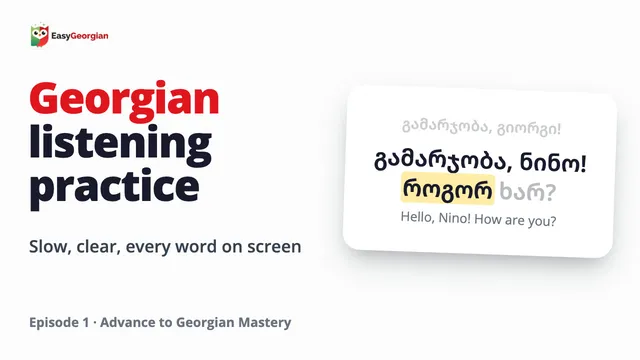
- The podcast course. Every episode of Advance to Georgian Mastery has a full transcript where each word lights up as it is spoken, with translations you can turn up or down. Episode 1 is free, and it is on YouTube in full.
 9:29
If you only do one thing from this post, do this one. Reading along is how your reading speed catches up with your listening.
Step 4: easy texts on paper
Georgian has very few graded readers compared with Spanish or French, so learners borrow from the shelf Georgian children read from. Children’s books are short, simple and repetitive, which is exactly what you want.
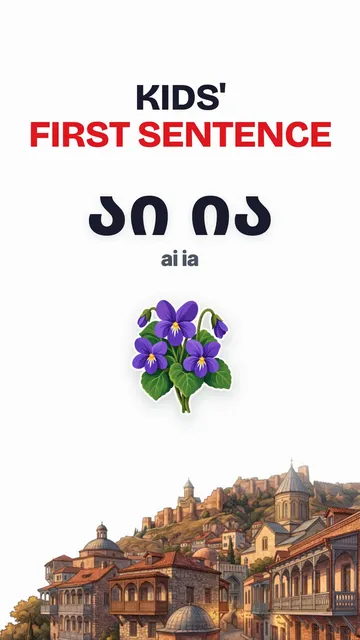
The most famous of them is Deda Ena, mother tongue, the primer that has started generations of Georgian children reading. Its first sentence is just two words.
 0:21
If you are in Tbilisi, the Biliki course books include reading material written for learners, and our post on the best books to learn Georgian covers where to buy them. Read children’s books aloud, slowly, and do not be embarrassed about it. Every Georgian adult you know read the same kind of book the same way.
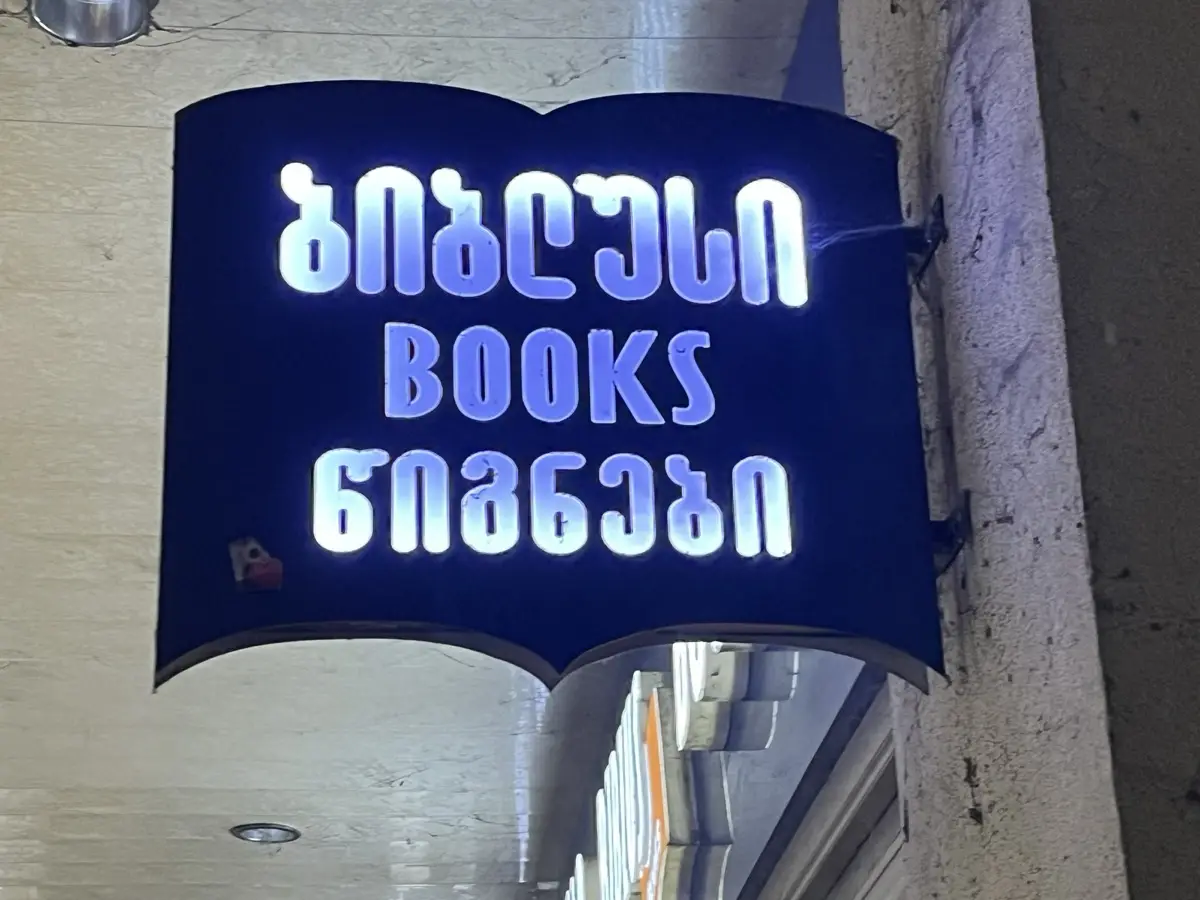
A bookshop sign that Tamar and I photographed in Tbilisi. Under the shop’s name and the English, the last line is ts’ignebi: ts’igni, book, with the plural ending -ebi.
Step 5: real Georgian
Once short texts feel comfortable, real Georgian is everywhere in Georgia and easy to find online.
- Signs, menus and shop windows. The cheapest reading practice there is, and it pays off immediately. A bakery sign that says პური, p’uri, bread, is reading practice you can eat.
- Messages. Many Georgians text in Latin letters rather than Georgian ones, which is its own reading skill. Our guide to the Georgian chat alphabet explains how it works, and the free transliteration tool converts it.
- News headlines and short articles. Headlines are short and they reuse a small set of words, so they are a good next step up. Read the headline, guess the story, then check.
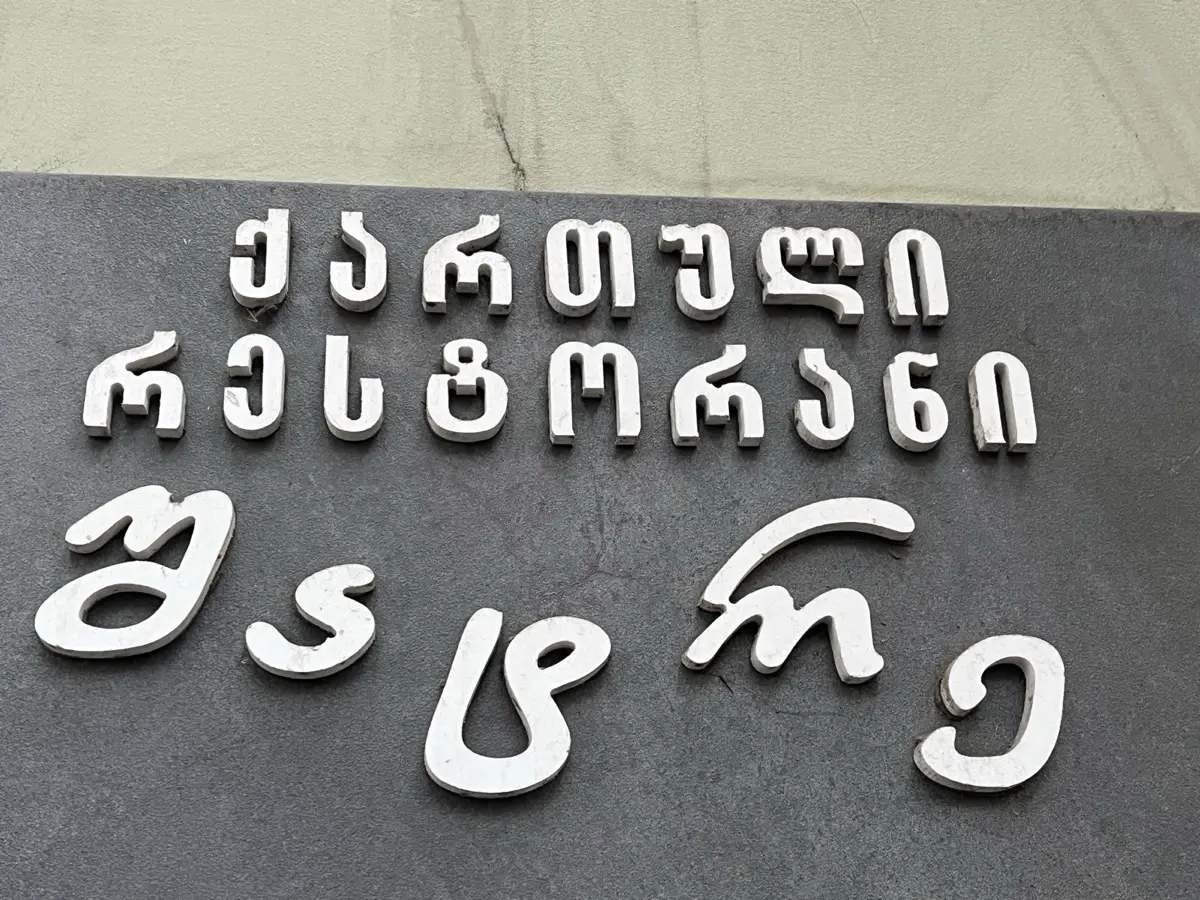
Here is another real sign from Tbilisi to try. Read the top two lines yourself before you look at the card under it. The first word is the kartuli from step 2.
Machine translation is fine for checking the gist of a sentence you cannot crack. It is unreliable on Georgian grammar, so do not learn from its output, and our Georgian AI benchmark shows where it goes wrong.
How to read so it counts
A few habits make the difference between reading time that builds your Georgian and reading time that just feels busy.
- Read aloud. It ties letters to sounds, catches the ejectives you would otherwise swallow, and doubles as speaking practice.
- Read a step below your listening. Reading should feel easy. If every line needs a dictionary, the text is too hard for now.
- Read a little every day. Ten minutes daily beats an hour on Sunday, for the same reason flashcard reviews do.
- Reread. The second reading of a text is where the words stick. Children read the same book twenty times for a reason.
- Do not translate every word. Aim to follow the meaning. Look up a word only when it blocks the sentence, or when it keeps coming back.
Sound first, then script
The reason this order works is the same reason our courses are audio-first. Georgian sounds are hard to learn from text, and a word you first meet on the page tends to get stored with the wrong sound attached. When the sound comes first, reading stops being decoding and becomes recognition, which is what reading actually is.
Our audio course, Speak Georgian in 50 Days, puts the sound in your ear from the first lesson, and the vocabulary you see under each lesson is there for exactly this step. The first lesson is free. For the listening side of the same plan, see our guide to Georgian listening practice.